 CJM Steel Group Ltd.

Choosing the Right Checkered Steel Plate: Sizes, Patterns & Applications Explained
222Explore the exact checkered steel plate options for stairs, trailers & factory floors. Compare by thickness, pattern & price. Expert guide from CJM.
View detailsSearch the whole station
In international structural projects, ASTM A36 vs EN S235JR is a common comparison when U.S. and European standards intersect. Although both are widely used carbon structural steels with similar strength levels, they are defined under different standard systems and design philosophies, which directly affects substitution decisions.
Understanding these differences is essential when selecting materials for global engineering and export projects.
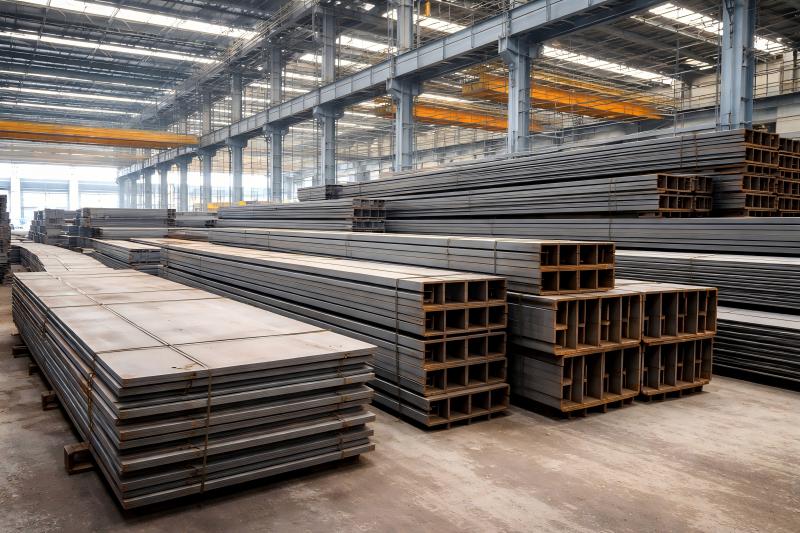
ASTM A36 is a carbon structural steel grade specified under the ASTM standard system, primarily used in projects following American codes and international contracts referencing ASTM materials. For a detailed technical overview—including chemical composition, mechanical performance, available dimensions and common equivalents—see ASTM A36 steel properties and equivalent grades.
EN S235JR is a European structural steel grade defined in EN 10025, commonly applied in EU-based construction, steel structures, and international projects adopting European standards.
Because both grades offer comparable yield strength levels and are widely available, ASTM A36 vs S235JR is frequently discussed as a potential cross-standard substitution.
When comparing ASTM A36 vs EN S235JR, the most important distinction lies in how the two standard systems define structural steel.
The ASTM system focuses on:
The EN system, by contrast, classifies structural steel based on:
This structural difference means EN standards embed more service-condition assumptions directly into the grade designation.
From a mechanical standpoint, ASTM A36 vs S235JR shows similar yield strength ranges, which is why they are often considered together.
Tensile strength ranges also overlap significantly.
However, this comparison should not be interpreted as “better or worse.”
Instead, it reflects different approaches to defining structural performance, rather than a direct one-to-one equivalence.
One of the most critical differences in ASTM A36 vs EN S235JR lies in impact toughness requirements.
EN S235JR includes a mandatory Charpy V-notch impact test:
ASTM A36, in its standard specification, does not require mandatory impact testing unless explicitly requested by the project specification.
This means:
For structures exposed to dynamic loads, temperature variation, or impact-sensitive conditions, this difference becomes particularly relevant.
In international structural projects, material selection often depends on the governing standard rather than strength alone.
Within the EN structural steel system, S235JR is often selected alongside higher-strength grades depending on load requirements and design margins. To better understand how S235JR compares with other EN grades in terms of strength level and typical applications, refer to this S235, S275 and S355 structural steel comparison.
Is S235JR equivalent to ASTM A36?
From a strict standards perspective, they are not officially equivalent, as they belong to different standard systems.
From a functional standpoint:
Therefore, S235JR and ASTM A36 should be considered conditionally interchangeable, depending on project specifications, inspection requirements, and governing codes.
In summary, ASTM A36 vs EN S235JR is not a question of superiority, but of standard compatibility and application context.
Clear understanding of these differences helps reduce technical risk and ensures smoother material approval in international structural projects.
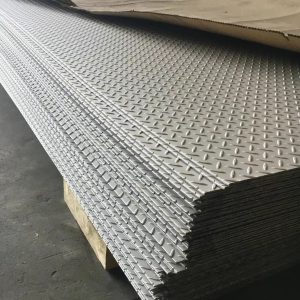
Explore the exact checkered steel plate options for stairs, trailers & factory floors. Compare by thickness, pattern & price. Expert guide from CJM.
View details
Construction machinery such as excavators, bulldozers, and concrete mixers operates in harsh environments where surfaces are exposed to constant wear and impact. One of the most effective ways to extend the service life of these machines is by u...
View details
Compare I Beam vs H Beam differences, strength, flange design, and applications. Learn how to choose the right structural steel beam for your project.
View details
Steel plates are a fundamental material in construction, heavy equipment manufacturing, trailers, and repair projects. Choosing the right steel plate size is essential for achieving the desired strength, durability, and cost efficiency. This guid...
View details
HelloPlease log in