In reinforced concrete construction, ASTM A615 rebar is one of the most widely used standards for reinforcing steel bars. Published by ASTM International, the ASTM A615 steel specification defines the requirements for hot-rolled carbon steel bars used in concrete reinforcement. The ASTM A615 standard (norma ASTM A615) is widely referenced in global construction markets, including North America, Latin America, and Asia.
This article provides a detailed overview of ASTM A615 reinforcing bar, covering chemical composition and mechanical properties tables, plus comparison with ASTM A706 and common engineering applications.
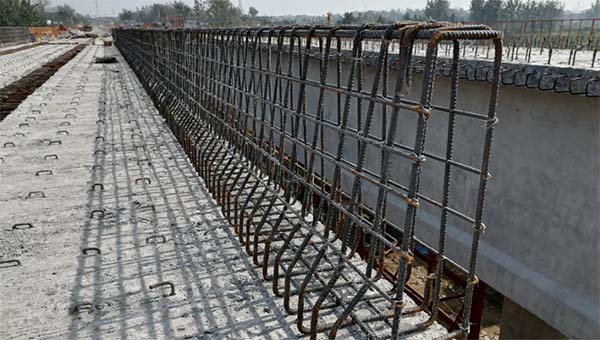
astm a615 rebar bridge construction
1. Overview of ASTM A615 Rebar
ASTM A615 reinforcing bar specifies hot-rolled carbon steel rebars commonly used in bridges, buildings, foundations, and tunnels.
Key points of the ASTM A615 steel standard:
Internationally recognized, especially in North America, the Middle East, Africa, and Asia.
Covers multiple strength levels, making it suitable for both residential and large-scale infrastructure projects.
Provides a cost-effective solution compared with alloy or weldable rebar standards.
2. ASTM A615 Rebar Grade Classification
ASTM A615 defines rebar grades based on minimum yield strength. The most widely used grades are Grade 40, Grade 60, and Grade 75.
Recommended for large-scale infrastructure such as bridge piers, tunnels, and heavy foundations.
3. ASTM A615 Rebar Chemical Composition
The ASTM A615 rebar chemical composition requirements for Grades 40, 60, and 75 are generally the same under ASTM A615. Differences between grades are mainly reflected in mechanical properties rather than chemical limits.
Element
Maximum Content (%)
Carbon (C)
0.30–0.50 (varies slightly with bar size)
Manganese (Mn)
0.60–1.50
Phosphorus (P)
≤ 0.050
Sulfur (S)
≤ 0.060
Influence of elements on ASTM A615 rebar properties:
Carbon (C): Increases strength but lowers weldability.
Manganese (Mn): Improves toughness and durability.
Phosphorus (P) & Sulfur (S): Must be minimized to avoid brittleness and cracking.
*The ASTM A615 Grade 60 chemical composition follows this standard range, ensuring consistent tensile strength and reliable performance across construction applications.
4. ASTM A615 Rebar Mechanical Properties
Mechanical performance is critical for safe structural design.
Grade
Yield Strength (MPa)
Tensile Strength (MPa)
Elongation (%)
ASTM A615 Grade 40
≥ 280
≥ 420
≥ 12
ASTM A615 Grade 60
≥ 420
≥ 620
≥ 9
ASTM A615 Grade 75
≥ 520
≥ 690
≥ 7
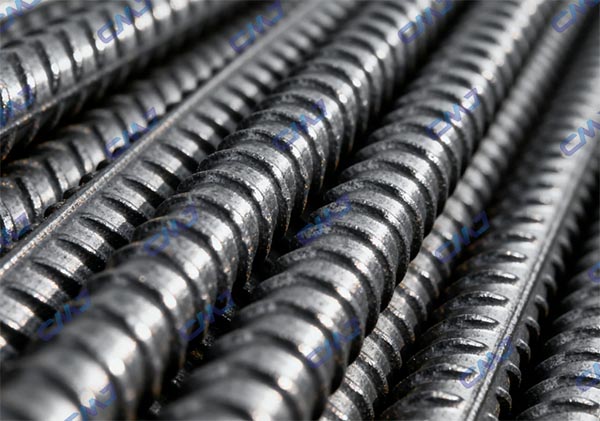
astm a615 rebar closeup
5. Common Applications of ASTM A615 Rebar Grades
Different grades of ASTM A615 rebar are used in different structural environments:
*ASTM A615 reinforcing bar is not intended for welding; attempting to weld A615 may compromise structural integrity. For applications requiring welding, ASTM A706 rebar is recommended.
7. FAQs about ASTM A615 Steel
Q1: Is ASTM A615 rebar weldable? ASTM A615 rebar is not primarily designed for welding because it is a carbon steel reinforcing bar without controlled alloying elements for weldability. Welding may reduce structural integrity. For welded or seismic applications, ASTM A706 rebar is typically specified.
Q2: What is the minimum tensile strength of ASTM A615 Grade 60? ASTM A615 Grade 60 rebar has a minimum tensile strength of 620 MPa (90 ksi) according to the latest ASTM specification. This ensures adequate performance in reinforced concrete beams, slabs, and bridge structures.
Q3: What is the chemical composition of ASTM A615 Grade 60 rebar? Grade 60 rebar follows ASTM A615 limits: Carbon ≤0.30–0.50%, Manganese 0.60–1.50%, Phosphorus ≤0.050%, Sulfur ≤0.060%.
Q4: What is the minimum yield strength of ASTM A615 Grade 60? The minimum yield strength of ASTM A615 Grade 60 rebar is 420 MPa (60 ksi). It is the most widely used reinforcing bar grade in commercial and infrastructure construction.
Q5: What is the minimum yield strength of Grade 40 in MPa? ASTM A615 Grade 40 rebar has a minimum yield strength of 280 MPa (40 ksi). It is commonly used in residential foundations and light structural applications.
Q6: What is the difference between Grade 40 and Grade 60 rebar? The primary difference is strength level: Grade 40: 280 MPa minimum yield strength / Grade 60: 420 MPa minimum yield strength. Grade 60 provides higher load-bearing capacity and is more commonly specified in bridges, highways, and multi-story buildings.
8. Conclusion
ASTM A615 rebar (latest version) remains one of the most important reinforcing steel standards in global construction. With its clear grade classification, reliable chemical composition, and mechanical performance, it offers a versatile and cost-effective solution for concrete reinforcement.
CJM regularly supply ASTM A615 Grade 60 (commonly used for bridges and floor structures), Grade 40 (for lighter structural applications), and Grade 75 (for heavy-load foundations). If you require Mill Test Certificates (MTC) or welding/processing recommendations, please provide the project application or construction requirements so we can offer accurate guidance and pricing.
Learn the most common automotive steel grades used in car body panels and structural parts, including SPCC, galvanized steel, HSLA and DP600, with their key properties and applications.
A36 vs A572 vs A516: which steel is better? Compare strength, price and applications, plus A283 equivalents. A practical guide for buyers and engineers.
Explore 4Cr3Mo3SiV tool steel properties and applications. Find GB 4Cr3Mo3SiV steel plates, suppliers, and manufacturers for hot work and cold work dies.
 CJM Steel Group Ltd.



HelloPlease log in