 CJM Steel Group Ltd.

Steel Round Bar Grades: Types, Standards and Selection Guide
684Learn about steel round bar grades, including carbon, alloy, tool and bearing steels. Compare standards and choose the right grade for your application.
View detailsSearch the whole station
High Strength Low Alloy (HSLA) steel grades are widely used in construction, infrastructure, and heavy equipment manufacturing due to their superior strength-to-weight ratio and improved durability.
Compared with conventional materials, hsla steel grades offer better mechanical performance, enhanced corrosion resistance, and more efficient structural design. This guide explains hsla steel grades, key properties, and practical applications, while also introducing how hsla steel plate is used in real-world projects.

HSLA steel (High Strength Low Alloy steel) refers to a group of low carbon steels that contain small amounts of alloying elements such as manganese, niobium, vanadium, and titanium.
In most cases, hsla steel grades include small amounts of alloying elements such as niobium, vanadium, and titanium, which significantly improve strength and toughness. Because of these enhancements, hsla steel is widely used in structural and industrial applications.
Understanding hsla steel grades is essential when selecting materials for structural and industrial use. Different standards define grades based on yield strength, toughness, and application.
| Standard | Grade | Yield Strength (MPa) | Typical Applications |
| ASTM | A572 Gr.42 | 290 | General structural components |
| ASTM | A572 Gr.50 | 345 | Bridges, buildings |
| ASTM | A572 Gr.60 | 415 | Heavy structures |
| ASTM | A572 Gr.65 | 450 | High-load applications |
| ASTM | A656 Gr.50–80 | 345–550 | Truck frames, cranes |
| EN | S355 | 355 | Structural steel |
| EN | S420 / S460 | 420–460 | High-performance structures |
These hsla steel grades are widely used in bridges, buildings, and heavy equipment, where higher strength and reduced weight are required. Selecting the right high strength low alloy steel grades helps optimize both performance and cost.
The performance of hsla steel grades comes from their optimized chemical composition and controlled rolling processes.
HSLA steels typically include:
These alloying elements refine grain structure and significantly improve hsla steel properties without increasing weight.
Due to its strength and efficiency, hsla steel is widely used across multiple industries.
In structural engineering, hsla structural steel beams are preferred because they allow lighter designs while maintaining high load capacity.
Related Reading:
Among different product forms, hsla steel plate is one of the most widely used materials derived from hsla steel grades. It is commonly selected for structural and industrial applications that require high strength and durability.
Compared to standard carbon steel plate, high strength low alloy steel plate provides better performance with reduced overall cost in long-term projects.
For buyers, selecting the right hsla steel grades and a reliable supplier is critical.
A professional hsla steel plate supplier should provide stable inventory, consistent quality, and support for international project requirements.
Different hsla steel grades are designed for varying strength requirements.
| Grade | Yield Strength | Application |
|---|---|---|
| Gr.50 | ~345 MPa | General structures |
| Gr.60 | ~415 MPa | Heavy-duty applications |
| Gr.80 | up to 550 MPa | High-stress environments |
Higher grades such as hsla grade 80 offer superior strength but may require more advanced fabrication processes.
Understanding these differences helps engineers select the most cost-effective material.
| Property | HSLA Steel | Carbon Steel |
|---|---|---|
| Yield Strength | 350–700 MPa | 250–400 MPa |
| Weight Efficiency | Up to 25% lighter | Heavier |
| Corrosion Resistance | Enhanced | Moderate |
| Weldability | Excellent | Good |
| Overall Durability | High | Medium |
HSLA steel helps reduce steel weight by 20–25% without compromising structural strength — a key reason it’s replacing traditional mild steel in large construction projects.
🔗 Read Our Detailed Guide: Carbon Steel vs Alloy Steel: What’s the Difference and Which One to Use
| Alloy Type | Key Feature | Typical Application |
|---|---|---|
| Hastelloy Alloy | Exceptional corrosion resistance | Chemical processing, heat exchangers |
| Monel Alloy | Nickel-copper alloy for marine use | Marine equipment, oil & gas |
| Inconel Alloy | High temperature and oxidation resistance | Power generation, turbines |
| Titanium Alloy | Lightweight, corrosion-resistant | Aerospace, energy, medical |
These materials complement our alloy steel portfolio, offering buyers a one-stop solution for structural and high-performance metal needs.
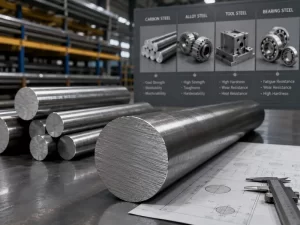
Learn about steel round bar grades, including carbon, alloy, tool and bearing steels. Compare standards and choose the right grade for your application.
View details
Explore how ASTM A615 rebar is used in concrete columns, walls, foundations, beams, driveways, and countertops. Learn grade selection tips for your project.
View details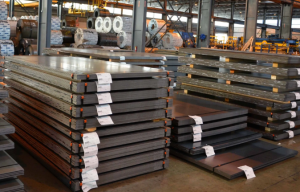
Comprehensive guide about ASTM A514 steel plate: strength, hardness, welding, machinability, chemical composition, and equivalent grades for your projects.
View details
Guía completa sobre la placa de acero esmaltado: características, usos industriales y diferencias frente a otros materiales.
View details
HelloPlease log in