 CJM Steel Group Ltd.

Q195 Steel Equivalent, Properties, and Q195 vs Q235 Comparison
9056Learn what Q195 steel is, its equivalent grades (ASTM A1008, SPCC, DC01), and how it compares with Q235 steel in strength, composition, and applications.
View detailsSearch the whole station
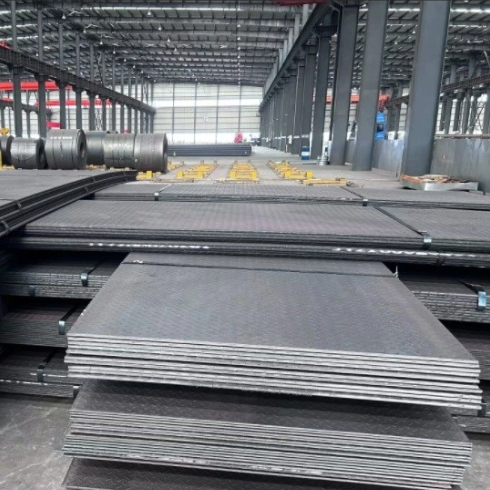
Checkered steel plate is widely used for industrial flooring, stair treads, platforms, vehicle ramps, and other applications where added surface traction is required. This guide covers checkered plate sizes, thickness, weight, patterns, common grades, applications, and price considerations, with practical reference data for material selection and purchasing.
| Item | Detail |
|---|---|
| Also known as | checker plate, chequered plate, diamond plate, tread plate |
| Patterns | Diamond, Five-bar, Lentil/Teardrop, Hexagonal |
| Thickness range | 2.5mm – 12mm |
| Theoretical weight at 6mm base thickness | 47.1 kg/m² (9.65 lb/ft²) |
| Standard sizes | 1220×2440mm, 1500×3000mm, 1500×6000mm |
| Common grades | A36, Q235B, S235JR (mild steel); Q345, A572 Gr.50 (higher strength) |
| Galvanized option | Hot-dip or electro-galvanized, +15–25% cost premium |
| Best for | Industrial flooring, stair treads, vehicle ramps, marine platforms |
A checkered steel plate, also called a checker plate or chequered plate, is a steel plate with a raised surface pattern on one side. The raised pattern provides additional traction compared with a plain steel plate.
Common patterns include diamond, five-bar, lentil or teardrop, and hexagonal designs. Checkered steel plate is commonly produced by hot rolling and is available in different thicknesses, grades, and surface treatments.
Checkered steel plates are typically supplied in thicknesses from 2.5 mm to 12 mm, with dimensions selected according to the application, loading requirements, and available fabrication or transport conditions. The weight of checkered steel plate is commonly calculated from the base plate thickness and steel density.
The most commonly supplied checkered plate standard sizes are listed below.
| Thickness (mm) | Standard Size (mm) | Theoretical Weight (kg/m²) | Weight (lb/ft²) |
| 2.5 | 1000×2000 | 19.6 | 4.02 |
| 3.0 | 1250×2500 | 23.6 | 4.83 |
| 4.0 | 1500×3000 | 31.4 | 6.43 |
| 5.0 | 1500×6000 | 39.3 | 8.05 |
| 6.0 | 1220×2440 | 47.1 | 9.65 |
| 8.0 | 1500×6000 | 62.8 | 12.87 |
| 10.0 | 1500×6000 | 78.5 | 16.08 |
| 12.0 | 1500×6000 | 94.2 | 19.30 |
Note: The above values are theoretical weights calculated based on base plate thickness.
Raised checkered patterns typically add approximately 3–5% to the total weight depending on pattern depth, and actual weight may vary slightly due to manufacturing tolerances.
The main types of checker plate are classified by material, including mild steel checker plate, carbon steel checker plate, and galvanized checker plate.
Mild steel checkered plates (MS checker plates) are the most common and economical option. They are easy to fabricate, weld, and cut—making them suitable for general structural and flooring use.
Carbon steel checkered plates offer slightly higher strength and hardness compared to mild steel. They are used where wear resistance and strength are more critical.
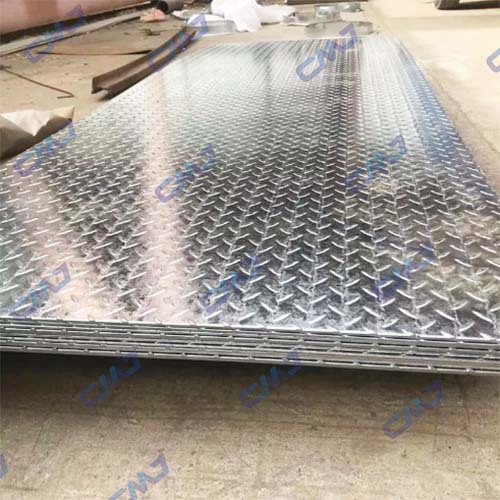
Galvanized checker plate is coated with a layer of zinc to resist corrosion, ideal for outdoor or humid conditions. They retain the same anti-slip texture while providing enhanced durability and longer lifespan.
The most common checkered plate patterns include:
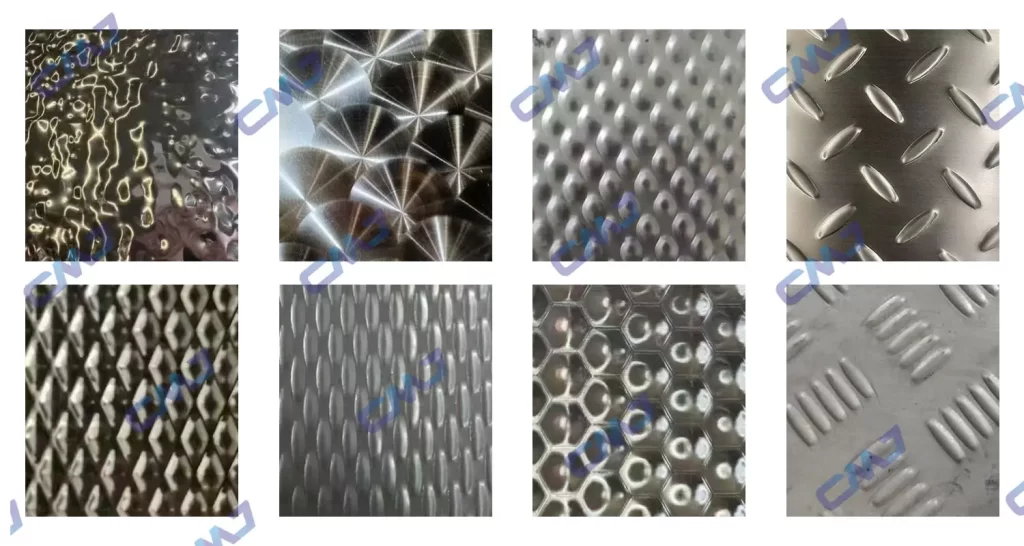
| Pattern | Typical Characteristics | Common Applications |
|---|---|---|
| Diamond | Widely used raised diamond pattern | Flooring, stairs, platforms, ramps |
| Five-bar | Parallel five-bar pattern | Industrial flooring, walkways, vehicle floors |
| Lentil / Teardrop | Rounded or elongated raised pattern | Flooring, platforms, decorative applications |
| Hexagonal | Hexagonal raised pattern | Flooring and architectural applications |
Pattern availability can vary by thickness, production standard, and supplier.
The appropriate grade depends on the required strength, application, and applicable material standard.
| Grade | Typical Use |
|---|---|
| A36 checkered steel plate | General structural and flooring applications |
| Q235B checkered steel plate | General-purpose flooring, platforms, and fabrication |
| S235JR | General structural applications |
| Q345 | Higher-strength structural applications |
| A572 Grade 50 chequered plate | Higher-strength applications where increased yield strength is required |
For general flooring and stair applications, A36, Q235B, and S235JR are commonly used. Higher-strength grades such as Q345 and A572 Grade 50 may be selected where higher structural strength is required.
Checkered steel plate is widely used in industrial flooring, stair treads, walkways, platforms, vehicle floors, truck and trailer ramps, machinery access platforms, and marine or offshore platforms.

The required thickness of checkered steel plate depends on the expected load, support spacing, span, and application conditions. Typical ranges are:
| Application | Common Thickness |
|---|---|
| Decorative / light-duty | 2.5–3.0 mm |
| Stair treads | 3.0–4.5 mm |
| Walkways and platforms | 4.5–6.0 mm |
| Vehicle floors and ramps | 6.0 mm and above |
| Marine and outdoor platforms | 4.5–8.0 mm+ |
For structural or heavy-duty applications, thickness should be selected based on the actual design load and support conditions rather than application category alone.
For a more detailed breakdown of how checker plates are used in different scenarios such as stairs, flooring, garages, and outdoor environments, you can refer to our guide on Practical Applications of Checker Plates.
The price of checkered steel plate varies depending on material grade, thickness, surface coating, and order volume. For bulk orders, customized thicknesses, or specific standards, contact our team for a quotation.
🡒 Request a Quote for Your Checkered Steel Needs
Learn what Q195 steel is, its equivalent grades (ASTM A1008, SPCC, DC01), and how it compares with Q235 steel in strength, composition, and applications.
View details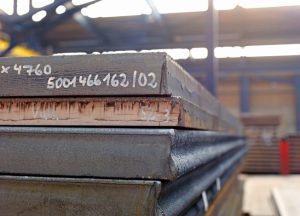
Standard steel plate thickness chart from 1/4” to 12”, including inch-to-mm conversion and weight reference. Quick lookup table for engineering and fabrication projects.
View details
Detailed comparison for O1 vs A2 tool steel for knives and tooling in their properties. Find the right O1 or A2 steel supplier with global delivery service.
View details
Looking for ASTM A572 equivalent material? Check Grade 50 equivalents (EN/GB), yield strength chart, and verified properties to avoid wrong material selection.
View details
Hi
How much length we can provided unsupported length for 5mm checkered lenegth.
2026-06-1116:49
Hi there,
For a 5 mm checkered plate, the unsupported span is typically around 500–700 mm under light load, but it depends on load and support conditions.
2026-06-1118:01