 CJM Steel Group Ltd.

Steel Plate Cutting Cost: How Much Does Custom Cutting Add to the Price?
521Learn what affects steel plate cutting cost, including thickness, cutting method, complexity, quantity, and custom cut-to-size requirements.
View detailsSearch the whole station
This comprehensive guide is created for international steel buyers, engineers, EPC contractors, and project managers who need reliable, decision-oriented information about carbon steel materials.
In one place, this guide helps you:
Carbon steel is an iron-based alloy in which carbon is the primary alloying element, with limited additions of manganese, silicon, phosphorus, and sulfur. Unlike alloy steels or stainless steels, carbon steel does not rely on large amounts of chromium, nickel, or molybdenum to achieve performance.
Because of this simple composition, carbon steel offers:
For these reasons, carbon steel remains one of the most widely used materials in construction, infrastructure, manufacturing, and general fabrication.
In international procurement, carbon steel grades are designated under different standard systems such as ASTM, EN, GB, and JIS, each with its own naming logic, chemical composition limits, and mechanical property requirements.
| Standard | Typical Grades | Typical Applications |
|---|---|---|
| ASTM | A36, A572, A516 | structural steel, bridges, pressure vessels |
| EN | S235, S275, S355 | buildings, steel structures |
| GB | Q235, Q355 | construction and infrastructure |
| JIS | SS400 | fabrication and export structures |
In cross-border projects, buyers often need to align carbon steel grades from different standards, as technically comparable grades may follow different designation rules and testing methods.
Understanding these grade systems helps engineers and procurement teams select materials that meet both design requirements and regional compliance standards.
To better understand how carbon steel fits into the broader structural steel supply landscape, you may find our
Structural Steel Sourcing Guide: Types, Grades, and Global Standards helpful when planning multi-standard or cross-border procurement.
Carbon steel is commonly classified based on carbon content. The amount of carbon directly affects the material’s strength, hardness, ductility, and weldability.
| Type | Carbon Content | Typical Uses |
|---|---|---|
| Low Carbon Steel | < 0.25% | structural steel, plates, fabrication components |
| Medium Carbon Steel | 0.25 – 0.60% | shafts, mechanical parts, machinery components |
| High Carbon Steel | > 0.60% | tools, wear-resistant parts, cutting equipment |
Low carbon steel accounts for the majority of structural applications because it provides a balanced combination of weldability, formability, and structural strength.
Medium and high carbon steels are generally used for mechanical or specialized applications where higher hardness or wear resistance is required.
Carbon steel performance is defined by a combination of chemical composition limits and mechanical property requirements specified in each standard.
Key chemical elements include carbon, manganese, silicon, phosphorus, and sulfur. Proper control of these elements affects weldability, toughness, and consistency.
| Element | Typical Range |
|---|---|
| Carbon (C) | 0.05 – 2.0% |
| Manganese (Mn) | 0.30 – 1.65% |
| Silicon (Si) | 0.10 – 0.60% |
| Phosphorus (P) | ≤ 0.04% |
| Sulfur (S) | ≤ 0.05% |
Mechanical properties typically evaluated include:
These values form the technical basis for selecting grades suitable for load-bearing, forming, or pressure-related applications. Among low carbon structural steels, ASTM A36 steel plate is one of the most widely specified grades for buildings, bridges, general fabrication, and industrial structures. It represents a typical balance of strength, weldability, and availability, making it a common reference point when evaluating carbon steel materials.
For a detailed breakdown of its chemical composition limits, mechanical properties, density values, and commonly accepted international equivalent grades, you can refer to our dedicated guide on
ASTM A36 Steel Plate – Chemical Composition, Properties, Equivalent Grades & Density Guide
Beyond mechanical performance, several practical factors influence both material selection and final project cost:
Considering these factors early helps reduce specification changes, delays, and cost overruns.
Carbon steel is often evaluated alongside other materials during design and procurement.
Key comparisons include:
Each comparison focuses on strength, corrosion behavior, lifecycle cost, and application suitability.
Accurate weight estimation is essential for pricing, logistics, and structural planning. Carbon steel plate weight depends on thickness, width, length, and density assumptions. For fast and accurate estimation, you can:
Carbon steel remains the backbone material for global construction and engineering due to its balance of strength, availability, and cost efficiency.
If this guide has helped you narrow down suitable grades, standards, or thickness ranges, the next step is technical confirmation and quotation.
Carbon steel is one of the most recyclable construction materials, with a recycling rate exceeding most alternatives. With proper surface protection and maintenance, its service life in structural applications can be significantly extended.
These characteristics align carbon steel with modern sustainability and lifecycle considerations in infrastructure and industrial projects.

Learn what affects steel plate cutting cost, including thickness, cutting method, complexity, quantity, and custom cut-to-size requirements.
View details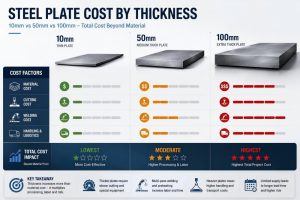
Compare 10mm, 50mm and 100mm steel plate costs beyond material price. Learn cutting, welding and fabrication costs to avoid overpaying.
View details
Guía completa sobre la placa de acero esmaltado: características, usos industriales y diferencias frente a otros materiales.
View details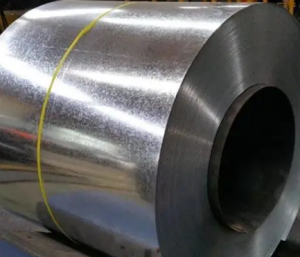
Explore galvanized steel properties including yield strength, tensile strength, hardness, coating specs, and grades for construction and industrial use.
View details
HelloPlease log in