 CJM Steel Group Ltd.

AR500 vs AR550 vs AR600 Steel: Which One Should You Choose?
7797Compare AR500 vs AR550 vs AR600 steel in hardness, wear resistance, price, and use. Learn how to choose the right abrasion resistant steel for your project.
View detailsSearch the whole station
S355JR, S355J2, and S355NL differ mainly in impact test temperature and low-temperature performance, which directly determine where each grade can be safely used.
For most engineering and procurement decisions, the key question is simple:
Choosing the wrong grade can lead to brittle fracture risks in cold environments, so understanding these differences is essential for structural safety and compliance.
| Grade | Yield Strength (MPa) | Impact Test | Temperature | Condition | Typical Use |
| S355JR | ≥355 | 27J | +20°C | As rolled | Standard structures |
| S355J2 | ≥355 | 27J | -20°C | As rolled | Bridges, cold regions |
| S355NL | ≥355 | 27J | -50°C | Normalized / Normalized Rolled | Offshore, low-temperature equipment |
For a broader comparison of EN structural steels, see our guide: S235 / S275 / S355 Structural Steel Comparison and Properties.
For global sourcing, equivalent material comparison is a key concern.
| EN Grade | ASTM Equivalent | JIS | GB |
| S355JR | ASTM A572 Gr 50 | SM490A | Q345B |
| S355J2 | ASTM A572 Gr 50 / A992 | SM490B | Q345D |
| S355NL | ASTM A516 Gr 70 (approx., toughness differs) | SM490C | Q345E |
⚠️ Important:
These are reference equivalents, not exact substitutions.
👉 In procurement, always confirm:
When comparing S355JR vs S355J2 vs S355NL, the most critical factor is Charpy V-notch impact testing:
This is why:
Many buyers compare S355J2 vs S355NL for low-temperature projects.
Key differences:
Conclusion:
This is one of the most common procurement questions.
Short answer:
Why:
👉 Rule of thumb:
If your structure is exposed to outdoor winter conditions,
S355J2 is the safer and widely accepted choice.
Selection should always be based on service temperature and safety requirements:
In international projects, S355J2 is the most commonly specified grade, while S355NL is used when safety margins are critical.
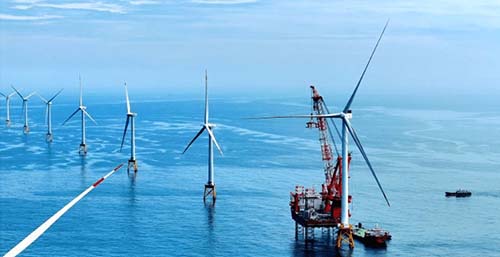
These grades are supplied in plate, coil, round bar, and pipe forms, used across multiple industries:
The difference is impact test temperature: S355JR is tested at +20°C, while S355J2 is tested at –20°C.
The most common ASTM equivalent for S355JR is ASTM A572 Grade 50, widely used for general structural applications.
S355J2 is commonly compared with ASTM A572 Grade 50 or ASTM A992 in structural applications. However, exact substitution should be verified based on impact toughness and chemical composition.
S355NL is often referenced against ASTM A516 Grade 70 or A572 Grade 50 for low-temperature plate applications, though its fine-grain and normalized condition set it apart.
S355JR can replace S355J2 only in projects that do not require low-temperature impact toughness. For outdoor structures in cold climates or components exposed to winter temperatures, S355J2 remains the safer choice.
S355NL offers superior low-temperature toughness (-50°C) and is delivered in a normalized condition, making it suitable for offshore, pressure equipment, and heavily welded structures. S355JR is intended for standard structural applications without low-temperature requirements.
Neither grade is universally “better.” S355J2 is preferable for colder climates due to its –20°C impact toughness, while S355JR is a cost-efficient choice for general construction in moderate environments.
S355J2 is suitable for general heavy structures requiring –20°C impact toughness, while S355NL is preferred for offshore, wind energy, or low-temperature pressure equipment due to its –50°C toughness and normalized delivery.
Yes. For many structural applications, S355JR is considered comparable to ASTM A572 Grade 50 due to similar strength and composition.
S355J2+N indicates S355J2 steel delivered in a normalized condition (+N).
Normalizing improves grain structure, toughness, and weldability compared with standard as-rolled S355J2.
In international procurement, S355J2+N equivalent material is often compared with ASTM A572 Grade 50 or ASTM A516 Grade 70 depending on toughness requirements.
Still unsure which S355 grade best suits your project?
CJM Steel supplies S355JR, S355J2, and S355NL plates and coils for global buyers.
Contact our engineering team for customized material selection and supply support.
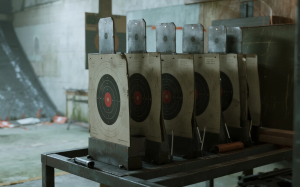
Compare AR500 vs AR550 vs AR600 steel in hardness, wear resistance, price, and use. Learn how to choose the right abrasion resistant steel for your project.
View details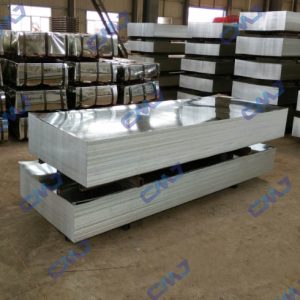
Learn about galvanized steel thicknesses (11, 12, 14, 16, 18, 20, 24 gauge) and sizes. Get expert advice on choosing the right steel sheet for your project.
View details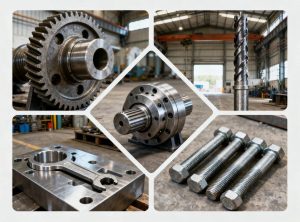
Discover 4140 steel overview: key specifications, broad applications in automotive, machinery, and energy industries and main features for buyers and engineers.
View details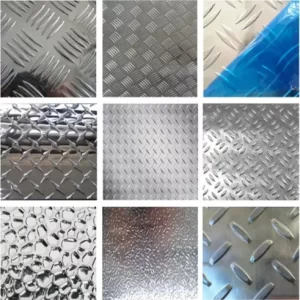
Checkered plate thickness 2.5–12mm, weight 19.6–94.2 kg/m². Diamond, five-bar & lentil patterns. Grades A36, Q235, S235JR & galvanized. Size guide included.
View details
HelloPlease log in