 CJM Steel Group Ltd.

Steel C Channel Sizes Chart (C3–C15) – Dimensions & Weight per Foot
30847Complete AISC C channel sizes chart with dimensions, weight (kg/m), and mm conversions. Easy-to-use reference for engineers, fabricators, and steel buyers.
View detailsSearch the whole station
Q355 is a low-alloy high-strength structural steel defined in GB/T 1591 with a minimum yield strength of 355 MPa. It is widely used in buildings, bridges, machinery, and fabrication.
For global buyers, the key question is:
“What is Q355 equivalent to in EN, ASTM, and JIS standards?”
Below is the commonly accepted international equivalence:
| Chinese Standard | Equivalent Standard | Grade |
|---|---|---|
| GB/T 1591 | EN 10025-2 | S355JR / S355JO / S355J2 |
| GB/T 1591 | ASTM A572 | Grade 50 (based on yield strength) |
| GB/T 1591 | JIS G3106 | SS490* |
*Note: SS490 comparison is based mainly on tensile properties; confirm yield strength, impact toughness, and specification requirements before substitution.
| Property | Value |
| Standard | GB/T 1591 |
| Minimum Yield Strength | ≥355 MPa |
| Tensile Strength | 470–630 MPa |
| Typical Grades | Q355B / Q355C / Q355D / Q355E |
| Property | Q355 | S355 |
| Minimum Yield Strength | ≥355 MPa | ≥355 MPa |
| Tensile Strength | 470–630 MPa | 470–630 MPa |
| Elongation | Similar | Similar |
| Grade | Temperature | Requirement |
| Q355B | +20°C | ≥27 J |
| Q355C | 0°C | ≥27 J |
| Q355D | −20°C | ≥27 J |
| Q355E | −40°C | ≥27 J |
| S355JR | +20°C | ≥27 J |
| S355J0 | 0°C | ≥27 J |
| S355J2 | −20°C | ≥27 J |
| S355NL | −50°C | Higher notch toughness |
Q355 is generally equivalent to S355 in both strength and performance.
*For most structural applications, Q355 can be considered a functional equivalent to S355 when the correct grade is selected and approved by the project’s design authority.
For a broader understanding of S-series structural steels, you may also read our detailed comparison guide: S235/S275/S355 Structural Steel Comparison.
Below is the chemical composition of Q355 according to GB/T 1591-2018 (for thickness ≤ 16 mm, maximum values unless noted):
| Element | Q355B | Q355C | Q355D | Q355E |
| C | ≤0.24% | ≤0.22% | ≤0.20% | ≤0.18% |
| Si | ≤0.55% | ≤0.55% | ≤0.55% | ≤0.55% |
| Mn | ≤1.60% | ≤1.60% | ≤1.60% | ≤1.60% |
| P | ≤0.035% | ≤0.035% | ≤0.030% | ≤0.025% |
| S | ≤0.035% | ≤0.035% | ≤0.030% | ≤0.020% |
| Nb+V+Ti | ≤0.12% | ≤0.12% | ≤0.12% | ≤0.12% |
*Values follow GB/T 1591-2018
| Grade | Yield Strength (MPa) | Tensile Strength (MPa) | Elongation (%) | Impact Temperature |
| Q355B | ≥355 | 470–630 | ≥22 | 20°C |
| Q355C | ≥355 | 470–630 | ≥22 | 0°C |
| Q355D | ≥355 | 470–630 | ≥22 | −20°C |
| Q355E | ≥355 | 470–630 | ≥22 | −40°C |
*The above are the minimum requirements per GB/T 1591-2018 for rolled sections and plates. Q355E provides enhanced low-temperature toughness, suitable for cold regions, offshore structures, and energy projects.

| Application Scenario | Recommended Grade |
| General construction | Q355B |
| Welding-focused structures | Q355C |
| Outdoor / cold regions | Q355D |
| Extremely low temperature | Q355E |
Key Differences
Yes—Q355 steel can replace S355 and A572 Gr.50 in many applications such as:
However, the substitution is not automatic. It requires:
To summarize:
Now that the equivalence is clear, the next step is selecting the right product form.
To ensure structural safety, selecting the appropriate Q355 grade is critical. Ready to proceed? Choose the product that matches your project’s needs:
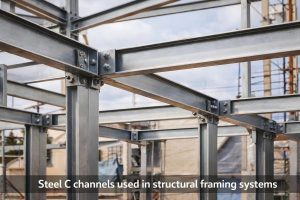
Complete AISC C channel sizes chart with dimensions, weight (kg/m), and mm conversions. Easy-to-use reference for engineers, fabricators, and steel buyers.
View details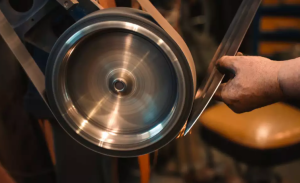
Detailed comparison for O1 vs A2 tool steel for knives and tooling in their properties. Find the right O1 or A2 steel supplier with global delivery service.
View details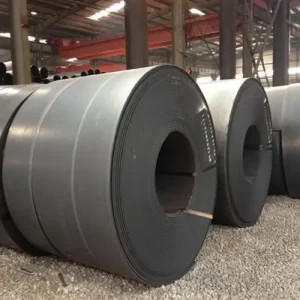
Carbon steel coils are widely utilized in a range of industries due to their strength, versatility, and affordability.
View details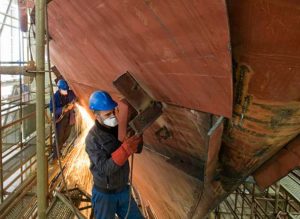
Technical comparison of AH36, DH36, and EH36 shipbuilding steel grades. Covers impact toughness differences, applications, and sourcing considerations.
View details
HelloPlease log in