ASTM A514 grades are widely used in high-strength structural applications where weight reduction and load-bearing performance are critical. Understanding the differences between A514 Grade B, E, H, and Q is essential for selecting the right material for bridges, heavy equipment, and structural frameworks.
This guide provides a clear A514 grade comparison, focusing on strength, thickness range, toughness, and real-world selection considerations for engineers, fabricators, and steel buyers.
ASTM A514 Grades Overview
The most commonly used A514 steel grades are B, E, H, and Q. While they share similar production processes, their differences in strength levels, thickness capability, and toughness determine their suitability for specific applications.
Property
Grade B
Grade E
Grade H
Grade Q
Yield Strength (MPa)
620–690
650–690
690
690
Typical Thickness (mm)
6–50
10–60
12–65
6–80
Toughness
Standard
High
High
High
Common Applications
Standard structures
Cold-region machinery
Bridges, cranes
General heavy-duty structures
Note: Other grades such as F, P, and S exist but are less commonly used. Grade A has largely been phased out in favor of B or Q in modern projects.
Selection Insight: Choose Grade E when structural components must maintain ductility and performance under low temperatures.
A514 Grade H
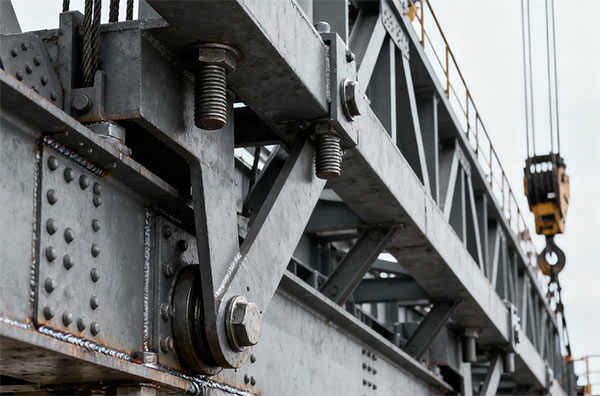
A514 Grade H steel used in heavy machinery and load bearing structural components
ASTM A514 Grade H provides a combination of high strength and good toughness, particularly for thicker plates.
Strength Profile: High yield and tensile strength, consistent across thicker plates.
Fabrication: Preheating recommended for thicker sections; weldable using standard techniques.
Applications: Bridge components, crane frames, heavy machinery supports.
Selection Insight: Grade H is preferred for heavy-load applications where thickness and strength consistency are critical.
A514 Grade Q
ASTM A514 Grade Q steel is the most widely used and versatile grade among all A514 grades.
Strength Profile: Highest combination of yield and tensile strength among commonly stocked grades.
Fabrication: Offers good weldability and machinability across a wide thickness range.
Applications: Heavy-duty construction, general structural steel, versatile use in bridges and equipment frames.
Selection Insight: A514 Grade Q is often selected as the default option due to its availability and balanced performance across various applications.
Which A514 Grade Should You Choose?
Selecting the right A514 steel grade depends on project-specific requirements. The following guidelines can help simplify decision-making:
Budget-focused projects → Grade B
Low-temperature environments → Grade E
Heavy load & thick plates → Grade H
General-purpose applications → Grade Q
In practical procurement, availability and delivery time can also influence the final grade selection.
Conclusion
Understanding ASTM A514 grades is essential for making informed material selection decisions. By comparing Grade B, E, H, and Q in terms of strength, toughness, and application, buyers can select the most suitable option based on performance and cost considerations.
For most applications, A514 Grade Q offers the best balance of versatility and availability, while Grades E and H are preferred for specialized environments and heavy-duty structures.
CJM supply the full range of A514 grades with full mill certification and can advise on the most cost-effective choice for your specific application. Check our A514 Steel Plate Page or Get a Competitive Quote.
FAQ
What are the main differences between A514 grades? The main differences between ASTM A514 grades lie in strength, thickness range, and toughness. Grade B is for general use, Grade E is for low temperatures, Grade H supports thicker plates, and Grade Q offers the best overall versatility.
Which A514 grade is best for heavy structures? A514 Grade H and Grade Q are best for heavy structures. Grade H performs well in thick sections, while Grade Q provides a balanced combination of strength, availability, and wide application range.
Is A514 Grade Q better than Grade B? Yes, A514 Grade Q generally offers higher strength and a wider thickness range than Grade B, making it more suitable for demanding structural applications, while Grade B is used for cost-sensitive projects.
Which A514 grade is suitable for low temperature applications? A514 Grade E is specifically designed for low temperature applications, providing improved toughness and impact resistance compared to other A514 grades.
Compare S235, S275 and S355 steel properties with yield strength, tensile strength and equivalent grades under EN, ASTM and JIS. View complete steel data chart.
 CJM Steel Group Ltd.


HelloPlease log in