 CJM Steel Group Ltd.

Types of Roofing Sheets: How to Choose the Right Steel Sheet for Your Roof
9252Not sure which roofing sheet to choose? Compare GI, PPGI and Galvalume by cost, lifespan and application to find the best option for your project.
View detailsSearch the whole station
| Feature | S235 | S275 | S355 |
|---|---|---|---|
| Yield Strength | 235 MPa | 275 MPa | 355 MPa |
| Market Position | Budget | Balanced | Premium |
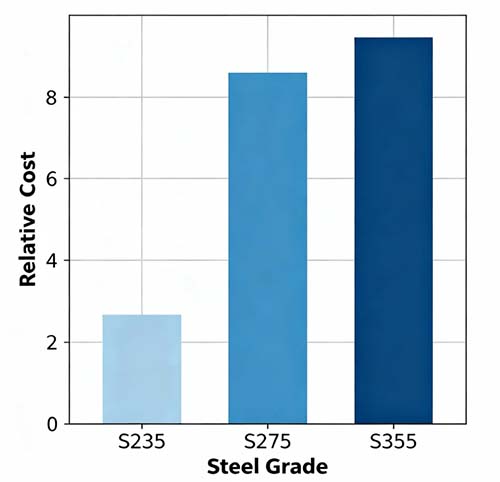
| Relative Cost | $ (Lowest) | $$ (+10–12%) | $$$ (+20–25%) |
| Availability | Excellent (common stock) | Very Good (stocked) | Good (some sizes need rolling) |
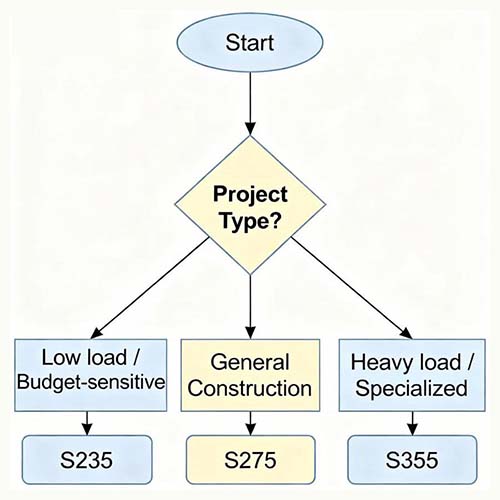
| Best For | Low-load, cost-driven projects | General construction, high demand | Heavy construction, project-based sourcing |
For detailed mechanical properties, chemical composition and equivalent grades, see our full guide: S235 S275 S355 steel properties and equivalent guide.

Choosing between S235, S275, and S355 steel is one of the most common decisions in structural and fabrication projects. While all three are standard structural steels under EN 10025, they differ significantly in yield strength, cost, and typical applications.
In this guide, we compare S235 vs S275 vs S355 steel in terms of strength, properties, price per ton, and real-world usage, so you can quickly decide which grade is best for your project.
👉 The key difference between S235 vs S275 vs S355 is primarily strength and performance under load.
Price is a key factor for buyers and project planners.
However:
S235 steel is widely used where cost control is the priority and load requirements are relatively low.
Typical Applications:
Why choose S235:
S275 steel provides improved strength with moderate cost increase, making it a reliable choice for general structural applications.
Typical Applications:
Why choose S275:
S355 steel is designed for demanding environments where higher load capacity and structural performance are required.
Typical Applications:
Why choose S355:
S355J2 / S355JR Wind Tower Steel Plate
If you’re comparing subgrades, see our detailed guide on S235JR vs S355J2 steel differences for strength, toughness, and typical applications.
Contact us today for a competitive quote and current stock availability.
Choosing between S235 vs S275 vs S355 steel depends on your project requirements, budget and supply conditions.
If you are sourcing S235, S275 or S355 steel plates, coils or structural sections, contact us with your required grade, size, quantity and destination port to receive a tailored quotation and delivery plan.
Not sure which roofing sheet to choose? Compare GI, PPGI and Galvalume by cost, lifespan and application to find the best option for your project.
View details
Find 42CrMo equivalent materials including AISI 4140 and Russian GOST grades. Learn differences and choose the right steel pipe for your project.
View details
Compare pressure vessel steel grades and equivalents across ASTM, EN, and GB standards. Find A516, P265GH, Q345R and other PVQ steel grades in one chart.
View details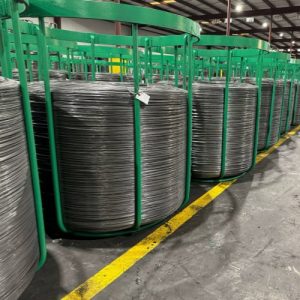
Carbon steel wire is a widely used material in various industries due to its strength, durability, and cost-effectiveness. It is commonly found in applications ranging from automotive to construction, offering an excellent balance of performance a...
View details
HelloPlease log in