 CJM Steel Group Ltd.

Explore the uses of carbon steel coils
2393Carbon steel coils are widely utilized in a range of industries due to their strength, versatility, and affordability.
View detailsSearch the whole station
The carbon steel plate price per ton is one of the most important factors for buyers sourcing steel globally. However, there is no fixed number, because carbon steel price, carbon steel cost, and overall steel plate pricing depend on thickness, grade, size, and processing requirements.
In real purchasing scenarios, buyers are not only comparing steel plate price per ton, but also evaluating the total cost of carbon steel, including cutting, dimensions, and delivery conditions.
Understanding these key cost drivers helps you estimate carbon steel prices more accurately and avoid unrealistic quotations.
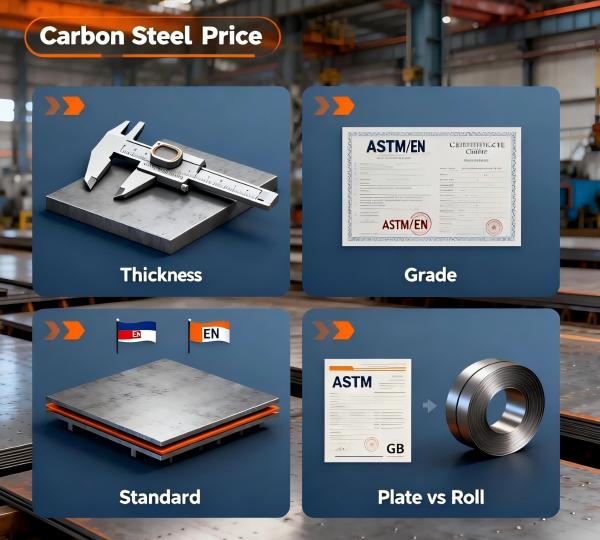
The main factors affecting carbon steel plate price per ton are summarized below:
| Factor | Impact Level | Why It Matters |
|---|---|---|
| Thickness | ★★★ | Affects rolling difficulty and mill capability |
| Steel Grade | ★★☆ | Higher strength requires stricter composition control |
| Plate vs Coil | ★★★ | Processing cost included in plate |
| Size & Dimensions | ★★☆ | Non-standard sizes increase cost |
| Certification | ★★ | Testing and inspection add cost |
These factors explain why carbon steel prices and steel plate costs vary significantly across different orders.
Thickness is the most important factor affecting carbon steel plate price per ton.
(Based on 10–20 mm A36 carbon steel plate as the baseline)
The exact increase depends on mill capability, order volume, and steel grade.
For plates above 40 mm, only a limited number of mills can produce them, and yield rates are lower. This is why heavy plates often carry a significant premium in carbon steel pricing.
This is why buyers find carbon steel price per ton differs depending on thickness.
To better understand how thickness impacts your total procurement budget beyond material cost, see our steel plate cost by thickness guide (10mm vs 50mm vs 100mm).
Steel grade directly impacts both performance and carbon steel plate price.
Higher-strength steels require stricter chemical composition control and more advanced production processes, increasing the overall cost of carbon steel.
In practical sourcing:
Choosing the right grade is not only about performance, but also about optimizing total carbon steel cost.
Different standards influence carbon steel plate price per ton, mainly through certification and production requirements.
Price differences are usually driven by:
Standards do not directly determine price, but they influence cost structure and availability.
One key factor in steel plate pricing is the difference between plate and coil.
Steel plates can be sourced in two main ways:
The second route involves more complex rolling processes and limited production capacity, which increases overall carbon steel plate price per ton.
Plate size and processing significantly affect the final carbon steel price.
Costs increase when:
To better understand how plate thickness and dimensions affect weight and cost, refer to steel plate size and weight chart.
Instead of relying on a fixed number, experienced buyers evaluate carbon stee l plate price per ton by comparing quotations against known cost patterns.
If a quotation does not follow these patterns, it may indicate:
This method helps buyers quickly evaluate carbon steel cost without relying on outdated or misleading price references.
To receive an accurate quotation, provide:
Clear specifications help suppliers calculate carbon steel prices more accurately and avoid delays.
If you are sourcing steel plates and need a reliable carbon steel plate price per ton, the fastest way is to request a quotation based on your exact specifications.
Send your requirements (grade, thickness, size, quantity), and get:
Carbon steel coils are widely utilized in a range of industries due to their strength, versatility, and affordability.
View details
Learn what carbon steel profiles are, their main types (I-beam, channel, angle), properties, and industrial uses. Find reliable carbon steel profiles suppliers.
View details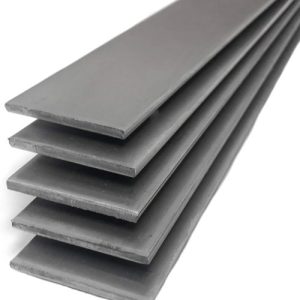
Carbon steel plate is a durable, versatile material used in construction, manufacturing, and industrial applications for structural support.
View details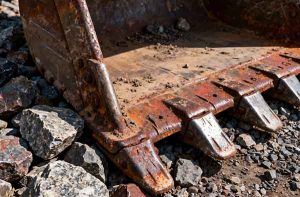
Learn what abrasion resistant steel is, how it works, key properties, grade systems, and how it compares with other abrasion resistant metals in industrial use.
View details
HelloPlease log in