 CJM Steel Group Ltd.

Steel Round Bar Grades: Types, Standards and Selection Guide
623Learn about steel round bar grades, including carbon, alloy, tool and bearing steels. Compare standards and choose the right grade for your application.
View detailsSearch the whole station
Steel round bar is available in a wide range of diameters and lengths for machining, fabrication, construction, machinery manufacturing, and industrial applications. Choosing the correct steel round bar size is important because diameter, length, and weight directly affect material selection, machining requirements, transportation, and project cost.
This guide covers common steel round bar sizes, standard dimensions, weight per foot and per meter, and practical formulas for calculating round bar weight.
For buyers looking for available carbon steel round bar products, specifications, grades, and supply options, see our Carbon Steel Bar product category.
Steel round bars are primarily specified by their diameter. Common sizes range from small diameters used for precision machining to large diameters used for shafts, structural components, and heavy industrial applications.
The following table shows common metric steel round bar sizes and their approximate theoretical weight based on a carbon steel density of 7,850 kg/m³.
| Diameter (mm) | Approx. Inch Equivalent | Weight (kg/m) | Weight (kg/6 m) |
| 10 | 0.394 | 0.62 | 3.70 |
| 12 | 0.472 | 0.89 | 5.33 |
| 16 | 0.630 | 1.58 | 9.47 |
| 20 | 0.787 | 2.47 | 14.80 |
| 25 | 0.984 | 3.85 | 23.10 |
| 30 | 1.181 | 5.55 | 33.30 |
| 32 | 1.260 | 6.31 | 37.86 |
| 40 | 1.575 | 9.86 | 59.16 |
| 50 | 1.969 | 15.41 | 92.46 |
| 60 | 2.362 | 21.97 | 131.82 |
| 70 | 2.756 | 30.22 | 181.32 |
| 80 | 3.150 | 39.47 | 236.82 |
| 90 | 3.543 | 49.96 | 299.76 |
| 100 | 3.937 | 61.65 | 369.90 |
Among commonly ordered sizes, 20 mm, 25 mm, 30 mm, 40 mm, 50 mm, and 60 mm steel round bars are frequently used for general fabrication and machining applications.
Larger diameters such as 80 mm, 100 mm, and above are often selected for shafts, heavy machinery components, industrial equipment, and other applications requiring greater cross-sectional area.
The appropriate diameter should be selected according to the required mechanical properties, load conditions, machining dimensions, applicable standard, and end-use requirements rather than diameter alone.
The main dimensions used to specify a round bar are diameter and length.
Diameter is normally the primary dimension used when ordering a round bar. It determines the cross-sectional area and has a direct effect on the material’s weight.
For example, a 50 mm round bar has a substantially greater weight per meter than a 25 mm round bar because the cross-sectional area increases with the square of the diameter.
Steel round bars can be supplied in standard mill lengths or cut to specific lengths depending on the supplier and application.
Common commercial lengths include:
Cut-to-length service may also be available when customers require specific dimensions for machining or fabrication.
When requesting a quotation, buyers should normally provide the diameter × length, quantity, material grade or standard, and any required surface or machining condition.
Steel round bar weight per foot is commonly used by buyers working with imperial dimensions or calculating shipping and material requirements.
For a steel round bar, the theoretical weight per foot can be calculated from its diameter and material density. For carbon steel, a commonly used approximate density is 7,850 kg/m³.
The following table provides quick reference values for common inch diameters:
| Diameter (in.) | Approx. Weight (lb/ft) |
|---|---|
| 1/4″ | 0.17 |
| 3/8″ | 0.38 |
| 1/2″ | 0.67 |
| 5/8″ | 1.04 |
| 3/4″ | 1.50 |
| 7/8″ | 2.04 |
| 1″ | 2.67 |
| 1-1/4″ | 4.17 |
| 1-1/2″ | 6.00 |
| 1-3/4″ | 8.17 |
| 2″ | 10.68 |
| 2-1/4″ | 13.52 |
| 2-1/2″ | 16.69 |
| 3″ | 24.04 |
| 3-1/2″ | 32.72 |
| 4″ | 42.74 |
Weights are theoretical values calculated using a carbon steel density of 7,850 kg/m³. Actual weight may vary depending on material density and dimensional tolerances.
Because weight increases with the square of diameter, even a relatively small increase in diameter can significantly increase the total weight of a round bar.
When purchasing large quantities, calculating weight per foot or per meter helps buyers estimate:
For metric purchasing, kg/m is generally more convenient than kg/ft.
The theoretical weight of a steel round bar can be calculated using its diameter, length, and material density.
The basic formula is:
Weight = π × D² ÷ 4 × L × Density
Where:
When using this formula, the diameter and length must be converted into compatible units.
Suppose you have a 25 mm carbon steel round bar with a length of 6 m.
First, calculate the cross-sectional area:
Area = π × 25² ÷ 4 = 490.9 mm²
Using a carbon steel density of 7,850 kg/m³, the theoretical weight is approximately:
3.85 kg/m
For a 6 m bar:
3.85 × 6 ≈ 23.1 kg
Therefore, a 25 mm diameter carbon steel round bar with a 6 m length weighs approximately 23.1 kg per bar.
This is a theoretical calculation. The actual delivered weight can vary slightly because of material density and dimensional tolerances.
For quick calculations, buyers can use the following simplified formula for carbon steel round bars:
Weight (kg/m) = D² × 0.006165
Where:
The coefficient is derived from the circular cross-sectional area formula and carbon steel density:
π ÷ 4 × 7,850 ÷ 1,000,000 ≈ 0.006165
Therefore:
Weight (kg/m) = D² × 0.006165
For example, for a 25 mm round bar:
25² × 0.006165 ≈ 3.85 kg/m
For a 6 m bar:
3.85 × 6 ≈ 23.1 kg
This formula provides a convenient way to estimate carbon steel round bar weight without calculating the cross-sectional area separately.
For other materials, the coefficient should be adjusted according to the material’s actual density.
Selecting a suitable round bar size depends on more than diameter. Buyers should consider the following factors before placing an order.
Select the diameter based on the design drawing, machining allowance, load requirements, and final component dimensions.
If the bar will be machined, the purchased diameter may need to be larger than the finished component size to provide sufficient machining allowance.
Specify the required standard length or cut length. For large orders, standard mill lengths may reduce cutting waste and simplify transportation.
The required steel grade and standard should be confirmed according to the application and technical specification.
Different standards and grades can have different chemical compositions, mechanical properties, dimensional requirements, and availability.
Round bars may be supplied in different surface conditions, such as hot rolled, cold drawn, peeled, or ground, depending on the required dimensional accuracy and application.
For commercial purchasing, calculate the approximate total weight from:
Total Weight = Weight per Meter × Length × Quantity
This allows buyers to estimate transportation requirements and compare quotations based on a consistent quantity.
For quick reference, the most important relationship is:
Larger diameter = higher weight per meter
The weight increases approximately with the square of the diameter. Therefore, doubling the diameter does not simply double the weight.
For example:
A 50 mm bar weighs approximately four times as much per meter as a 25 mm bar, while a 100 mm bar weighs approximately four times as much as a 50 mm bar.
This relationship is particularly important when estimating material costs, lifting requirements, and transportation for larger diameter round bars.
Common metric steel round bar sizes include 10, 12, 16, 20, 25, 30, 40, 50, 60, 80, and 100 mm. Common inch sizes include 1/4″, 3/8″, 1/2″, 5/8″, 3/4″, 1″, 1-1/2″, and 2″. Actual availability depends on the applicable standard, grade, and supplier.
A 25 mm carbon steel round bar weighs approximately 3.85 kg/m, or about 23.1 kg for a 6 m bar.
Use Weight = π × D² ÷ 4 × L × Density. For a quick metric calculation with carbon steel, use Weight (kg/m) = D² × 0.006165.
Yes. The theoretical weight of a round bar increases approximately with the square of its diameter, so larger diameter bars become significantly heavier.
Specify the diameter, length, quantity, material grade or standard, surface condition, and any required cutting or machining. This allows the supplier to provide an accurate quotation and confirm availability.
CJM Steel supplies carbon steel round bars in a range of diameters and lengths for machining, fabrication, machinery, and industrial applications. Custom cutting and required inspection or mill test documentation can be discussed according to your project requirements.
Send us your required diameter × length × grade for a quotation.
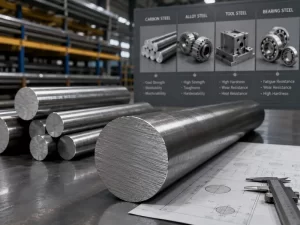
Learn about steel round bar grades, including carbon, alloy, tool and bearing steels. Compare standards and choose the right grade for your application.
View details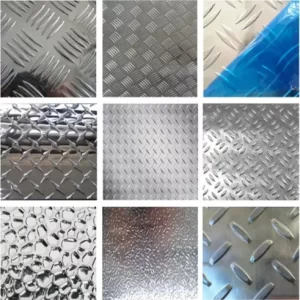
Checkered plate thickness 2.5–12mm, weight 19.6–94.2 kg/m². Diamond, five-bar & lentil patterns. Grades A36, Q235, S235JR & galvanized. Size guide included.
View details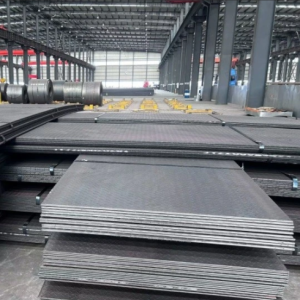
Explore different types of checkered steel plates including diamond, teardrop, and tread plates. Learn about their uses, export standards, and global sourcing tips from CJM.
View details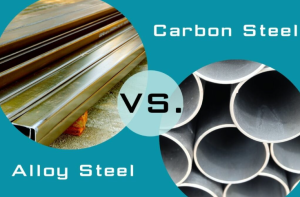
Understand the key differences between carbon steel and alloy steel. Compare strength, cost, and best use cases. Expert buying tips from CJM.
View details
Comprehensive guide about ASTM A514 steel plate: strength, hardness, welding, machinability, chemical composition, and equivalent grades for your projects.
View details
HelloPlease log in