EN 10025 steel is a widely used European standard for structural steel applied in construction, machinery manufacturing, and infrastructure projects. As an internationally recognized structural steel standard, EN 10025 provides a common technical basis for material selection in load-bearing applications.
For international projects involving cross-border sourcing, EN 10025 steel is often referenced during design, procurement, and material approval stages. Understanding the EN 10025 standard and how it compares with other national standards is therefore an essential step before steel procurement decisions are finalized.
This article focuses on the EN 10025 standard, explains why EN 10025 equivalents are frequently required, and clarifies how EN 10025 structural steel relates to ASTM, JIS, and GB material systems.
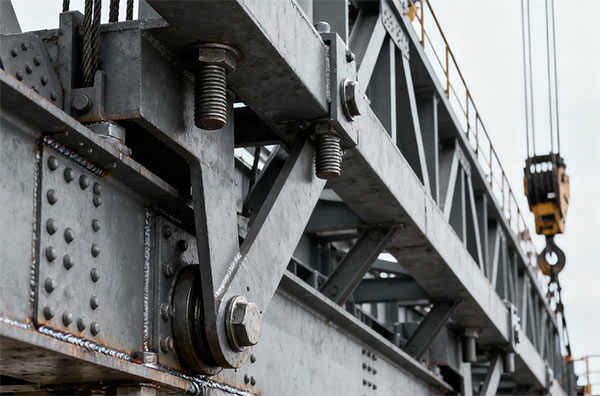
Typical structural and industrial applications where EN 10025 steel is commonly specified
What Is EN 10025 Steel?
The EN 10025 standard defines technical requirements for European structural steel used in load-bearing applications. Rather than representing a single material, EN 10025 steel covers a family of structural steel grades designed for different strength levels and service conditions.
Key aspects defined under the EN 10025 steel standard include:
Minimum yield strength requirements
Chemical composition limits
Impact toughness and testing conditions
Because EN 10025 establishes a standardized framework instead of a single specification, it enables consistent material selection and quality control across different suppliers and regions. In international projects, EN 10025 steel is commonly used as the reference standard when evaluating alternative material sources.
Why EN 10025 Equivalents Are Important in International Sourcing
In global engineering and construction projects, structural steel is often sourced locally to meet delivery schedules, cost targets, or regulatory requirements. As a result, procurement teams frequently need to identify EN 10025 equivalent materials when the original standard is not directly available.
Understanding EN 10025 steel equivalents supports several critical procurement and engineering activities:
Aligning local steel supply with EN 10025 design requirements
Evaluating alternative standards without compromising structural performance
Preparing documentation for cross-border material approval and inspection
In practice, many sourcing issues arise when EN 10025 equivalent steel is assumed to be interchangeable without proper verification. A clear understanding of equivalency helps engineers and buyers reduce approval risks before orders are placed.
EN 10025 Steel Equivalent Standards Overview
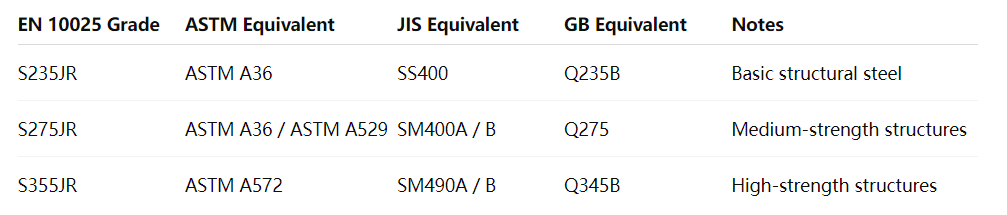
The table below outlines commonly referenced EN 10025 steel equivalents across major international standards. These equivalencies are typically used as a preliminary reference during engineering review and supplier communication.
<strong>EN 10025 steel equivalents in ASTM JIS and GB standards<strong>
*Equivalent standards are based on comparable mechanical property ranges. Final material substitution should always be confirmed against project specifications and testing requirements.
Selecting EN 10025 Steel for International Projects
Selecting EN 10025 steel for international applications typically involves more than matching yield strength values. Procurement and engineering teams must evaluate multiple factors during material approval, including:
Structural load requirements and safety margins
Service environment and operating conditions
Availability of EN 10025 equivalent materials in local markets
When comparing commonly used EN 10025 structural steel grades, differences in strength levels and application scope often influence sourcing decisions. In many procurement scenarios, comparing S235, S275, and S355 structural steel grades helps clarify suitability for different project requirements and cost targets.
From a sourcing perspective, understanding how these grades perform within the EN 10025 standard framework allows buyers to communicate requirements more effectively with suppliers using different national standards.
EN 10025 Steel in Procurement and Material Approval
During the procurement stage, EN 10025 steel is often referenced in technical documentation, inspection plans, and supplier quotations. When equivalent standards are proposed, buyers and engineers typically review:
Compliance with EN 10025 mechanical requirements
Certification and test report alignment
Consistency between specified and supplied materials
In this context, EN 10025 equivalent steel serves as a bridge between design intent and practical sourcing. Clear alignment at this stage reduces the risk of rework, rejection, or project delays once materials enter production or construction.
FAQ: EN 10025 Steel and Equivalents
Q1: What does EN 10025 steel refer to? A: EN 10025 steel refers to a European standard covering a range of structural steel grades used for load-bearing applications.
Q2: Why are EN 10025 equivalents often required? A: EN 10025 equivalents are needed when steel is sourced outside Europe and must meet comparable mechanical and performance requirements.
Q3: Are EN 10025 steel equivalents identical to the original standard? A: Equivalent materials are comparable but not identical. Mechanical properties, testing conditions, and certification requirements should always be reviewed.
Q4: How is EN 10025 steel used in procurement decisions? A: EN 10025 steel provides a reference framework for material approval, supplier evaluation, and international sourcing coordination.
Conclusion
EN 10025 steel plays a central role in international structural steel sourcing by providing a unified standard for material selection and performance evaluation. Understanding the EN 10025 standard and its commonly referenced equivalents enables engineers and procurement teams to align design intent with practical sourcing options.
By using EN 10025 steel equivalents correctly during the procurement and approval process, international projects can achieve greater consistency, compliance, and supply reliability.
If you are evaluating EN 10025 steel or equivalent materials for an international project, CJM Steel can support specification review and sourcing coordination.
Learn what abrasion resistant steel is, how it works, key properties, grade systems, and how it compares with other abrasion resistant metals in industrial use.
Learn the most common automotive steel grades used in car body panels and structural parts, including SPCC, galvanized steel, HSLA and DP600, with their key properties and applications.
Explore steel round bar sizes, dimensions, and weight charts in metric and inch sizes. Learn round bar weight per foot, kg/m, and calculation formulas.
 CJM Steel Group Ltd.


HelloPlease log in