 CJM Steel Group Ltd.

Top 10 Steel Grades Used in International Construction Projects
3060Explore the 10 most used steel plate grades in international construction. Compare A36, A572, A516, S355, EH36, and more for your project needs.
View detailsSearch the whole station
Q195 steel is a widely used low carbon steel grade under the Chinese GB/T700 standard. Known for its excellent ductility, smooth surface finish, and good weldability, it is commonly applied in cold forming, stamping, and light structural components.
Understanding Q195 steel equivalent, mechanical properties, and how it compares to Q235 is essential when selecting the right material for international projects and sourcing decisions.
Q195 is a low carbon structural steel defined in the GB/T700 standard. It is characterized by low carbon content, which provides high ductility and excellent formability, making it suitable for cold rolled products and fabrication processes.
In practical applications, Q195 steel is commonly used for:
Compared with higher strength grades, Q195 prioritizes ease of processing and cost efficiency over load-bearing performance.
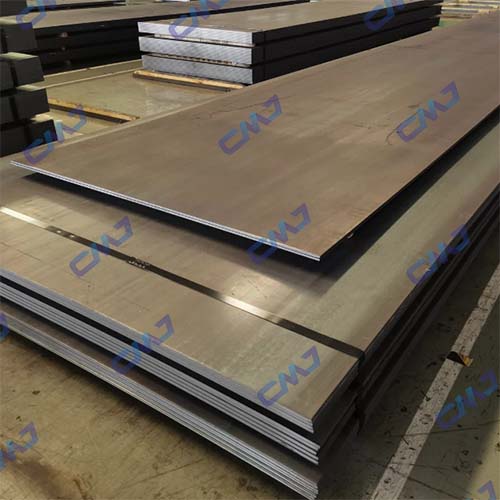
When sourcing globally, identifying the correct Q195 steel equivalent material ensures compatibility with local standards and processing requirements.
The closest international equivalents to Q195 include:
| Standard | Equivalent Grade | Notes |
| ASTM (USA) | A1008 (Commercial Quality – CS Type A) | Closest in application and carbon content. However, A1008 is typically used for cold-formed steel, and detailed specs may differ. |
| JIS (Japan) | SPCC (Commercial Cold Rolled Steel) | SPCC and Q195 are commonly used interchangeably for low-strength, non-critical applications like stamping, household appliances, and automotive panels. |
| EN (Europe) | DC01 (EN 10130) | A cold-rolled low-carbon steel grade used for forming applications. Similar tensile strength and yield point to Q195. |
The Q195 steel equivalent is generally considered ASTM A1008 (commercial quality), JIS SPCC, and EN DC01, although exact substitution should be verified based on mechanical requirements and forming conditions.
The Q195 steel properties reflect its low carbon design, making it ideal for forming and welding applications.
| Element | Q195 |
| C | ≤ 0.06% |
| Mn | ≤ 0.35% |
| P | ≤ 0.035% |
| S | ≤ 0.035% |
| Property | Q195 |
| Yield Strength (MPa) | ≥195 |
| Tensile Strength (MPa) | 315–430 |
| Elongation (%) | ≥33 (t≤1.2mm) |
These Q195 steel properties provide:
The comparison of Q195 vs Q235 steel is a common consideration when selecting between formability and strength.
| Element | Q195 (max) | Q235 (max) |
| C (Carbon) | 0.06–0.12% | 0.12–0.20% |
| Mn (Manganese) | 0.25–0.50% | 0.30–0.70% |
| Si (Silicon) | ≤0.30% | ≤0.30% |
| S, P (Impurities) | ≤0.050% | ≤0.045% |
Summary: Q195 steel has lower carbon and manganese content, while Q235 contains higher alloying elements, resulting in increased strength.
| Property | Q195 | Q235 |
| Yield Strength (MPa) | ≥195 | ≥235 |
| Tensile Strength (MPa) | 315–430 | 375–500 |
| Elongation (%) | ≥33 | ≥26 |
Summary:
Choose Q195 steel for:
Choose Q235 steel for:
In summary, Q195 vs Q235 comes down to processing performance versus structural strength.
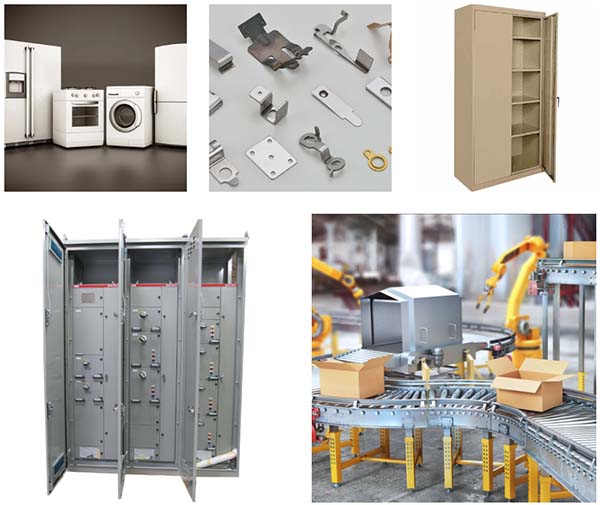
Due to its excellent formability, Q195 steel is widely used across multiple industries.
Typical applications include:
Q195 steel is also commonly used as a base material for galvanized steel product. After zinc coating, it offers improved corrosion resistance, making it suitable for roofing, cladding, and outdoor applications.
Q195 steel is typically supplied in different forms depending on processing and application requirements.
The choice between coil and sheet depends on production scale, processing methods, and end-use requirements.
Q195 steel offers a balanced combination of cost, ductility, and processing performance, making it a reliable choice for general manufacturing and cold forming applications.
At CJM Steel, we supply Q195 cold rolled steel products for international markets with flexible specifications and export-ready packaging. All materials comply with ISO standards and are customizable in thickness and surface coating.
📩 Contact us for your next shipment or technical datasheet request:
Email: info@cjmstainlesssteel.com
WhatsApp: +86 181 9190 6640
Explore the 10 most used steel plate grades in international construction. Compare A36, A572, A516, S355, EH36, and more for your project needs.
View details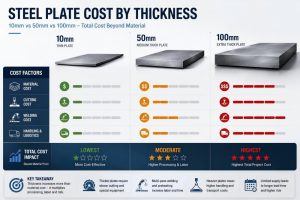
Compare 10mm, 50mm and 100mm steel plate costs beyond material price. Learn cutting, welding and fabrication costs to avoid overpaying.
View details
Monel alloy plate is a high-performance material made from a combination of nickel and copper, offering outstanding resistance to corrosion and high strength.
View details
Learn the practical differences between hot and cold rolled steel coils. Discover the right choice for your project and how to source quality steel coil from China with CJM.
View details
HelloPlease log in