In industries where high temperatures and aggressive environments are part of daily operations, choosing the right alloy is more than a matter of durability—it’s a matter of safety, efficiency, and cost-effectiveness. Among the most trusted materials in such demanding applications is the Incoloy 800 series, especially in its coil form, which offers exceptional flexibility for manufacturing and fabrication processes.
Incoloy 800 series steel coils—including 800, 800H, and 800HT—are widely used in heat-resistant and corrosion-critical applications like petrochemical processing, power generation, and high-temperature furnaces.
At CJM, we supply a wide range of Incoloy 800 coils with customizable sizes and international standards compliance, ideal for fabrication, tube production, and industrial-grade components.
While they share a similar composition, these alloys differ in carbon content and heat treatment requirements—affecting their strength and temperature capabilities. Let’s look deeper into their specifications and practical applications.
Understanding Incoloy 800, 800H, and 800HT: Differences, Composition & Properties
The Incoloy 800 series—comprising Incoloy 800, 800H, and 800HT—belongs to the family of austenitic nickel-iron-chromium alloys. Though all three share a common base chemistry, they are tailored for slightly different operating conditions, especially in terms of creep resistance, oxidation behavior, and temperature stability.
Grade
Key Difference
Operating Temp (approx.)
Notable Advantage
Incoloy 800
Standard version
Up to 600°C (1112°F)
Excellent corrosion & oxidation resistance
Incoloy 800H
Higher carbon version
Up to 700–800°C (1292–1472°F)
Better creep & rupture strength
Incoloy 800HT
Optimized version (H-grade + tighter specs on Al/Ti)
Up to 800–1000°C (1472–1832°F)
Superior high-temp performance & metallurgical stability
These modifications make Incoloy 800HT coils particularly attractive for gasket applications and furnace tubing, where prolonged exposure to high heat is common.
Chemical Composition (wt%)
One of the most searched technical terms—incoloy 800 chemical composition—plays a critical role in differentiating performance:
Element
Incoloy 800
Incoloy 800H
Incoloy 800HT
Nickel (Ni)
30.0–35.0%
30.0–35.0%
30.0–35.0%
Chromium (Cr)
19.0–23.0%
19.0–23.0%
19.0–23.0%
Iron (Fe)
Balance
Balance
Balance
Carbon (C)
≤ 0.10%
0.05–0.10%
0.06–0.10%
Aluminum (Al)
0.15–0.60%
0.15–0.60%
0.25–0.60%
Titanium (Ti)
0.15–0.60%
0.15–0.60%
0.25–0.60%
Manganese
≤ 1.5%
≤ 1.5%
≤ 1.5%
Silicon
≤ 1.0%
≤ 1.0%
≤ 1.0%
Note: The enhanced aluminum and titanium content in 800HT ensures better stabilization during long-term exposure to elevated temperatures.
Mechanical Properties
Property
Incoloy 800
Incoloy 800H / 800HT
Yield Strength (MPa)
≥ 205
≥ 205–220
Tensile Strength (MPa)
≥ 520
≥ 520–600
Elongation (%)
≥ 30
≥ 30
Creep Rupture (1000h @650°C)
Moderate
Excellent
These specifications make the Incoloy 800 series ideal for use in high-temperature environments, particularly where strength, oxidation resistance, and carburization resistance are critical.
Forms and Supply Options
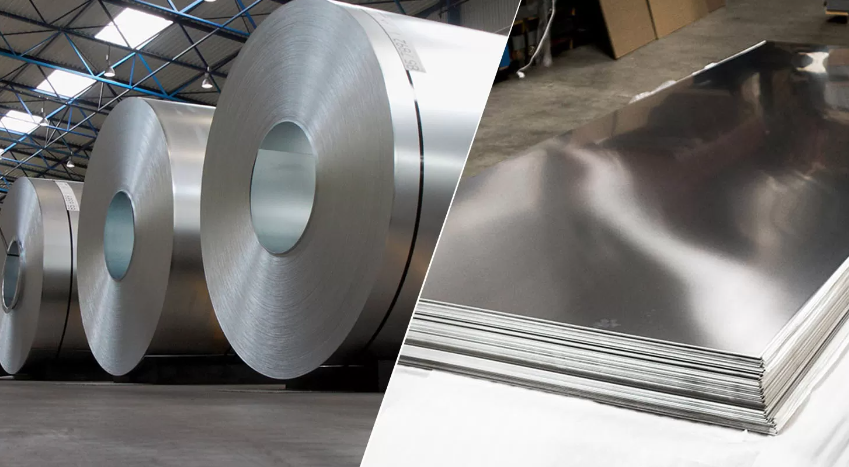
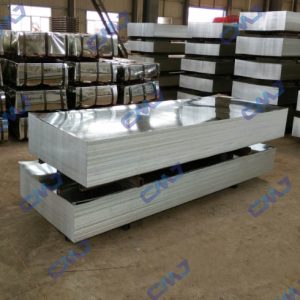
At CJM, we offer Incoloy 800, 800H, and 800HT in both steel coil and steel plate forms. Clients may choose coil for its ease of transport, continuous processing, or forming flexibility in automated manufacturing. Plates, on the other hand, offer stability for heavy-load applications and custom-cut dimensions.
alloy Incoloy 800 coils plates
We maintain a neutral approach in recommending coil versus plate—each form has its own merits depending on application:
Feature
Coil
Plate
Formability
Excellent for continuous roll forming
Ideal for machining and welding
Storage & Handling
Compact and space-saving
Easier to lift in large sections
Custom Cutting
Cut-to-length available
Custom shapes and sizes
Applications
Heat exchanger tubing, furnace parts
Reactor parts, structural components
We support both coil and plate options, and our technical team can help customers determine the most efficient format for their specific project requirements.
Applications of Incoloy 800 Series Coils
The versatility of the Incoloy 800 series has made it a material of choice in multiple industries requiring high-temperature and corrosion resistance:
1. Petrochemical and Refinery Industry
Incoloy 800 coils are widely used for heat exchanger tubing, reactor vessels, and transfer piping in hydrocarbon processing.
Excellent resistance to carburization and high-temperature oxidation makes 800H and 800HT particularly valuable in steam reformers and catalyst regeneration systems.
2. Power Generation
Utilized in superheater and reheater tubing within fossil fuel and nuclear power plants, especially where prolonged thermal exposure demands dimensional stability and creep resistance.
3. Furnace Equipment
High structural strength at elevated temperatures allows these alloys to be used in furnace muffles, retorts, and heat-treating baskets.
4. Pulp and Paper
Incoloy 800 coils are applied in chemical recovery systems, black liquor recovery boilers, and other equipment exposed to aggressive chemical media and fluctuating temperatures.
5. Aerospace and Marine Engineering
Components subjected to both high stress and corrosive saline environments (e.g., exhaust systems, engine seals) benefit from the alloy’s metallurgical stability.
Is Incoloy 800 Series Coil Right for Your Project?
The answer depends on your operating temperature, corrosive environment, mechanical loading, and fabrication process. Whether you need high creep strength (Incoloy 800H/800HT), long-term dimensional stability, or excellent resistance to oxidation and carburization, this family of alloys is engineered to perform.
Choosing coils allows for high-throughput forming and installation in large-scale systems, while plates remain ideal for static structures and welded assemblies. At CJM, we’re here to support both, ensuring you get the right format and right grade—on time and with technical assurance.
Looking for high-performance Incoloy 800 series steel coil or plate for your project? CJM offers precise specifications, global delivery, and custom processing options to meet your project needs. Contact us or explore more on our Incoloy alloy page.
Compare ASTM A36 vs EN S235JR in standards, yield strength, impact requirements and applications. Learn when they are interchangeable in international projects.
Explore steel round bar sizes, dimensions, and weight charts in metric and inch sizes. Learn round bar weight per foot, kg/m, and calculation formulas.
Learn about galvanized steel thicknesses (11, 12, 14, 16, 18, 20, 24 gauge) and sizes. Get expert advice on choosing the right steel sheet for your project.
 CJM Steel Group Ltd.


HelloPlease log in