 CJM Steel Group Ltd.


Steel Plate for the Oil & Gas Industry – API 5L, ASTM A516 & High-Performance Grades
3562Explore the best steel plates for oil and gas pipelines and storage tanks. Learn about API 5L, A516, A387, and more for your high-pressure needs.
View detailsSearch the whole station
ASTM A283 is a carbon steel plate specification covering four grades: A, B, C, and D. These grades are used in general structural fabrication, industrial equipment, storage tanks, and other applications requiring low to intermediate tensile strength.
Among these grades, ASTM A283 Grade C is commonly selected for general-purpose steel plate applications. Buyers and engineers often search for A283 steel properties, chemical composition, and equivalent materials when evaluating this grade for fabrication or material substitution.
This guide covers ASTM A283 steel chemical composition, mechanical properties, and Grade C equivalent materials, along with common applications and steel plate supply options.
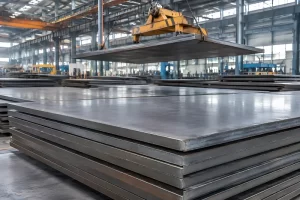
ASTM A283 covers carbon steel plates with four grades offering different strength levels. Grade A has the lowest strength requirements, while Grade D has the highest.
| Grade | Minimum Yield Strength (MPa) | Tensile Strength (MPa) |
|---|---|---|
| A283 Grade A | 165 | 310–415 |
| A283 Grade B | 185 | 345–450 |
| A283 Grade C | 205 | 380–515 |
| A283 Grade D | 230 | 415–550 |
A283 Grade C steel provides a balance of strength and ductility, making it a common choice for general-purpose structural and industrial fabrication. The appropriate grade depends on design loads, plate thickness, fabrication requirements, and service conditions.
The main ASTM A283 steel properties include chemical composition and mechanical properties. These parameters determine the material’s strength, ductility, and suitability for different fabrication applications.
The chemical composition of ASTM A283 steel varies by grade, with specified limits for carbon, manganese, phosphorus, and sulfur. Silicon requirements also depend on plate thickness.
| Chemical Element | Grade A (%) | Grade B (%) | Grade C (%) | Grade D (%) |
|---|---|---|---|---|
| Carbon (C), max. | 0.14 | 0.17 | 0.24 | 0.27 |
| Manganese (Mn), max. | 0.90 | 0.90 | 0.90 | 0.90 |
| Phosphorus (P), max. | 0.035 | 0.035 | 0.035 | 0.035 |
| Sulfur (S), max. | 0.040 | 0.040 | 0.040 | 0.040 |
| Silicon (Si), max. | 0.40 | 0.40 | 0.40 | 0.40 |
For plates over 40 mm thick, silicon is generally specified within a range of 0.15–0.40%. A minimum copper content of 0.20% applies when copper is specified.
For A283 Grade C chemical composition, the maximum carbon content is 0.24%, while manganese, phosphorus, and sulfur are controlled according to the standard. These limits support conventional fabrication and welding practices when appropriate procedures are used.
Actual composition should be verified against the applicable ASTM A283/A283M edition and the mill test certificate (MTC).
The mechanical properties of ASTM A283 steel include yield strength, tensile strength, and elongation. These values vary by grade and determine the material’s resistance to deformation and tensile loading.
| Mechanical Property | Grade A | Grade B | Grade C | Grade D |
|---|---|---|---|---|
| Yield Strength, min. (MPa) | 165 | 185 | 205 | 230 |
| Tensile Strength (MPa) | 310–415 | 345–450 | 380–515 | 415–550 |
| Elongation in 200 mm, min. (%) | 27 | 25 | 22 | 20 |
| Elongation in 50 mm, min. (%) | 30 | 28 | 25 | 23 |
ASTM A283 Grade C mechanical properties:
These A283 Grade C properties provide moderate strength and good ductility for general steel plate fabrication. The grade is suitable for applications that do not require high-strength or specialized alloy steel.
Elongation requirements depend on specimen dimensions and applicable testing provisions under ASTM A6/A6M. Buyers should confirm the requirements for the ordered plate.
ASTM A283 Grade C is commonly compared with Q235B, SS400, and S235JR when evaluating carbon steel plate alternatives under Chinese, Japanese, and European standards.
These grades have overlapping mechanical properties and are used in general structural and fabrication applications. However, they are not exact equivalents because their chemical composition, yield strength requirements, and thickness-dependent limits differ.
| Comparison Grade | Standard | Minimum Yield Strength (MPa) | Tensile Strength (MPa) |
|---|---|---|---|
| ASTM A283 Grade C | ASTM A283/A283M | 205 | 380–515 |
| Q235B | GB/T 700 | 235* | 370–500 |
| SS400 | JIS G3101 | 245* | 400–510 |
| S235JR | EN 10025-2 | 235* | 360–510 |
The listed minimum yield strengths for Q235B, SS400, and S235JR apply to plates up to 16 mm thick. Requirements change with thickness.
Q235B, SS400, and S235JR are commonly considered comparison grades for A283 Grade C, but none should be treated as an automatic one-to-one replacement. Their suitability depends on the required plate thickness, chemical composition, mechanical properties, and project specifications.
When selecting an A283 Grade C steel equivalent, buyers should compare the actual material requirements and confirm acceptance with the project engineer or end user.
ASTM A283 steel plates are used in general-purpose fabrication and industrial applications requiring moderate strength and conventional carbon steel properties.
Common applications include:
A283 Grade C steel plate is frequently selected for general fabrication because of its combination of strength, ductility, and processing suitability. Final material selection should consider design loads, operating temperatures, welding requirements, plate thickness, and applicable construction codes.
CJM supplies ASTM A283 steel plates for international distributors, steel stockholders, fabricators, and industrial buyers.
Available supply options include:
For ASTM A283 Grade C steel plate inquiries, send us the required grade, dimensions, quantity, and applicable standard to confirm availability and supply arrangements.
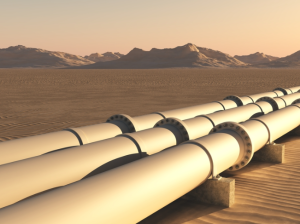
Explore the best steel plates for oil and gas pipelines and storage tanks. Learn about API 5L, A516, A387, and more for your high-pressure needs.
View details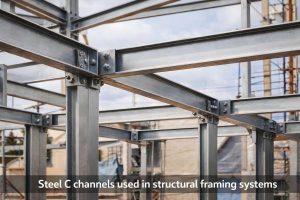
Complete AISC C channel sizes chart with dimensions, weight (kg/m), and mm conversions. Easy-to-use reference for engineers, fabricators, and steel buyers.
View details
Source carbon steel plates from China with this guide covering suppliers, prices, grades, shipping, import costs, and key factors for global buyers.
View details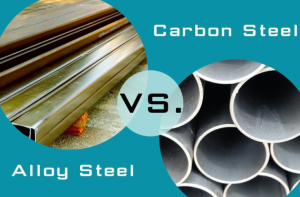
Understand the key differences between carbon steel and alloy steel. Compare strength, cost, and best use cases. Expert buying tips from CJM.
View details
HelloPlease log in