 CJM Steel Group Ltd.

Corrugated Steel Sheet Supplier
4459CJM Steel supplies corrugated steel sheets for roofing and industrial applications. Available in galvanized coating, different profiles with reliable supply.
View detailsSearch the whole station
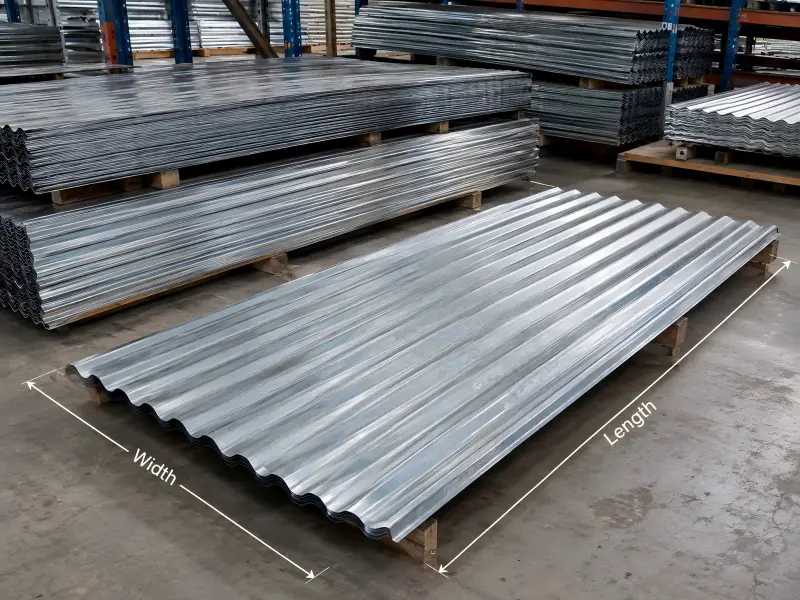
Corrugated steel sheets are supplied in a wide range of widths, lengths, thicknesses and corrugated profiles for roofing, siding, wall cladding and general construction applications.
For buyers comparing corrugated steel sheet sizes, the most important specifications are usually sheet width, length, thickness or gauge, profile and effective coverage width. This guide provides common metric and imperial dimensions, gauge-to-thickness references, and the key specifications to confirm when purchasing corrugated steel sheets.
The most common sheet size depends on the market, application and supplier. In general, 4 × 8 ft corrugated steel sheets and other fixed-length sheets are widely used, while longer sheets are often supplied for roofing projects.
| Common Size | Approx. Metric Size | Typical Use |
| 2 × 6 ft | 610 × 1829 mm | Small roofing and repair applications |
| 2 × 8 ft | 610 × 2438 mm | Small structures and wall applications |
| 3 × 6 ft | 914 × 1829 mm | Small roofing and fabrication |
| 3 × 8 ft | 914 × 2438 mm | Roofing and wall cladding |
| 4 × 6 ft | 1219 × 1829 mm | General construction |
| 4 × 8 ft | 1219 × 2438 mm | Common roofing, siding and fabrication size |
| 4 × 10 ft | 1219 × 3048 mm | Roofing and wall applications |
| 4 × 12 ft | 1219 × 3658 mm | Larger roofing areas |
| 5 × 8 ft | 1524 × 2438 mm | Larger wall and roofing applications |
| 5 × 10 ft | 1524 × 3048 mm | Commercial and industrial applications |
| 5 × 12 ft | 1524 × 3658 mm | Larger construction projects |
| Custom length | Project-specific | Large roofing and custom projects |
The table provides common reference dimensions rather than a fixed universal standard. Actual availability depends on the steel grade, thickness, corrugated profile, coating and supplier production range.
For large roofing areas, longer sheets can reduce the number of end laps and simplify installation. For smaller fabrication work, standard 4 × 8 ft corrugated steel sheet sizes are often easier to handle and transport.
A corrugated steel sheet size is normally specified using:
Width × Length
However, buyers should distinguish between overall width and effective coverage width, especially when purchasing corrugated roofing sheets.
| Dimension | Meaning | Why It Matters |
|---|---|---|
| Overall width | Total physical width of the sheet | Used to determine the manufactured sheet dimension |
| Effective coverage width | Width covered after side laps | Important for calculating roofing area |
| Sheet length | Distance from one end of the sheet to the other | Determines coverage along the roof slope |
| Side lap | Overlap between adjacent sheets | Affects effective coverage |
| End lap | Overlap between sheets installed end-to-end | Important when using shorter sheets |
For example, a corrugated sheet may have a specified overall width but provide a smaller effective coverage width after side overlap. Therefore, when requesting a quotation, buyers should confirm whether the quoted width refers to the overall sheet width or effective coverage width.
Corrugated steel sheets are commonly specified using either imperial dimensions or metric dimensions, depending on the market.
The following conversions are useful when comparing supplier specifications:
| Imperial Dimension | Exact Metric Conversion | Commonly Rounded Reference |
| 1 ft | 304.8 mm | 305 mm |
| 2 ft | 609.6 mm | 610 mm |
| 3 ft | 914.4 mm | 914 mm |
| 4 ft | 1219.2 mm | 1219 mm |
| 5 ft | 1524.0 mm | 1524 mm |
| 6 ft | 1828.8 mm | 1829 mm |
| 8 ft | 2438.4 mm | 2438 mm |
| 10 ft | 3048.0 mm | 3048 mm |
| 12 ft | 3657.6 mm | 3658 mm |
| 16 ft | 4876.8 mm | 4877 mm |
| 20 ft | 6096.0 mm | 6096 mm |
For example:
When purchasing from an overseas supplier, specifying the required unit system can help avoid misunderstandings. Buyers should provide dimensions in mm, m, inch or ft and confirm the final finished dimensions before production.
Thickness is another major specification when selecting corrugated steel sheets. In some markets, steel sheet thickness is specified in gauge, while international suppliers commonly quote thickness directly in millimeters.
Gauge numbers should not be treated as a universal mathematical conversion because the relationship can vary by gauge system and material standard. For procurement, the actual millimeter thickness should always be confirmed.
| Gauge | Approx. Steel Thickness | Metric Reference |
| 18 gauge | ~1.2 mm | Approx. 1.2 mm |
| 20 gauge | ~1.0 mm | Approx. 1.0 mm |
| 22 gauge | ~0.8 mm | Approx. 0.8 mm |
| 24 gauge | ~0.6 mm | Approx. 0.6 mm |
| 25 gauge | ~0.5 mm | Approx. 0.5 mm |
| 26 gauge | ~0.5 mm | Approx. 0.5 mm |
| 28 gauge | ~0.4 mm | Approx. 0.4 mm |
| 30 gauge | ~0.3 mm | Approx. 0.3 mm |
| 32 gauge | ~0.25 mm | Approx. 0.25 mm |
For example, buyers searching for 20 gauge corrugated steel sheet, 24 gauge corrugated steel sheets or a 28 gauge corrugated steel roofing sheet should confirm the actual thickness in millimeters when comparing quotations from different suppliers.
A specification such as 3mm corrugated steel sheet is normally clearer for international procurement because the required material thickness is stated directly rather than through a gauge number.
Depending on the application, corrugated steel sheets can be supplied in different thickness ranges.
| Approx. Thickness | Typical Consideration |
|---|---|
| 0.30–0.40 mm | Lightweight roofing and cladding applications |
| 0.45–0.50 mm | General roofing and wall applications |
| 0.55–0.60 mm | Higher durability and heavier-duty applications |
| 0.70–0.80 mm | Industrial and structural applications |
| 0.90–1.00 mm | Heavy-duty applications |
| 1.20 mm and above | Specialized heavy-gauge applications |
| 2.00–3.00 mm | Heavy steel sheet applications where required |
Actual suitable thickness depends on the corrugated profile, span, support spacing, loading conditions, coating system and project requirements.
Therefore, thickness should not be selected based on gauge alone. For a commercial roofing project, buyers should provide the intended application and required specifications so the supplier can quote the appropriate product.
Sheet dimensions are not determined by width and length alone. The corrugated profile also affects the final coverage and installation requirements.
Important profile-related specifications include:
| Specification | What Buyers Should Confirm |
|---|---|
| Corrugation profile | Shape and geometry of the corrugations |
| Corrugation depth | Height of the formed profile |
| Overall width | Total manufactured sheet width |
| Effective width | Coverage width after side overlap |
| Side lap | Required overlap between adjacent sheets |
| End lap | Required overlap between sheet lengths |
| Panel length | Finished length supplied for the project |
Two sheets with the same overall width may not provide the same effective coverage if their profiles or side-lap requirements are different.
For roofing projects, the effective coverage width is therefore more useful than the nominal sheet width when calculating the quantity of sheets required.
Standard dimensions are convenient for common construction and fabrication applications, but many commercial projects require custom corrugated steel sheet sizes.
| Requirement | Standard Supply | Custom Supply |
|---|---|---|
| Width | Common market dimensions | Specified by buyer |
| Length | Fixed standard lengths | Cut to required length |
| Thickness | Common gauges/thicknesses | Project-specified |
| Profile | Standard corrugated profiles | Selected according to project |
| Surface | Standard coating options | Specified coating/finish |
| Quantity | Standard order quantities | Project-based quantities |
Custom sizing can be useful when the project requires longer roofing panels, specific coverage widths or dimensions that minimize cutting and material waste.
For large orders, buyers should provide a complete specification sheet or drawing so the supplier can confirm the available dimensions and production requirements.
When requesting a quotation for corrugated steel sheets, providing complete dimensions makes it easier for the supplier to calculate the required quantity and prepare an accurate offer.
A typical purchasing specification should include:
For example, a buyer could specify:
Corrugated steel sheet, 0.50 mm thickness, 1219 mm overall width, 2438 mm length, galvanized surface, required quantity 5,000 sheets.
For roofing projects, it is also important to confirm whether the quoted dimensions are finished dimensions, whether the width is overall or effective coverage width, and whether the requested length includes any profile-related dimensional considerations.
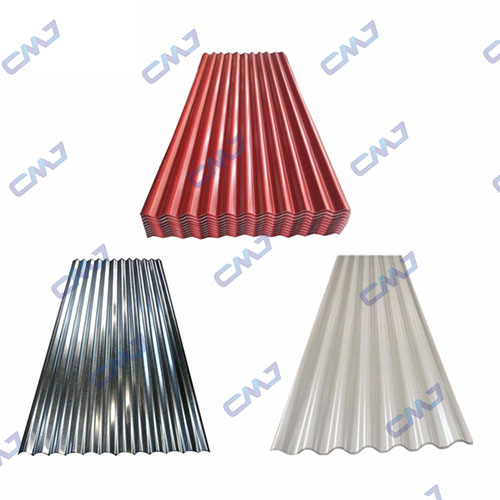
CJM Steel supplies corrugated steel sheets for construction, roofing, wall cladding and related applications.
Available specifications can be arranged according to project requirements, including:
For overseas buyers, complete specifications can be confirmed before quotation and shipment, including dimensions, thickness, profile, quantity and required documentation.
4 × 8 ft, approximately 1219 × 2438 mm, is a common reference size for corrugated steel sheets. Longer sheets such as 4 × 10 ft and 4 × 12 ft are also used for roofing and larger construction applications.
Common thicknesses include approximately 0.40 mm, 0.50 mm, 0.60 mm and 0.80 mm, with thicker material available for heavier-duty applications.
Gauge is a traditional way of specifying sheet thickness, while thickness in millimeters gives the actual dimensional measurement. When comparing international quotations, buyers should confirm the actual mm thickness.
Yes. 4 × 8 ft corrugated steel sheet is a widely used reference size, equivalent to approximately 1219 × 2438 mm.
Yes. Depending on the supplier and production requirements, custom sheet lengths can be supplied for projects that require specific roofing or cladding dimensions.
At minimum, provide the thickness, overall width, length, corrugated profile and quantity. For roofing applications, also confirm the required effective coverage width and surface coating.
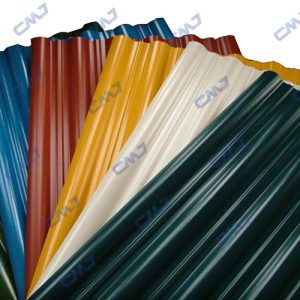
CJM Steel supplies corrugated steel sheets for roofing and industrial applications. Available in galvanized coating, different profiles with reliable supply.
View details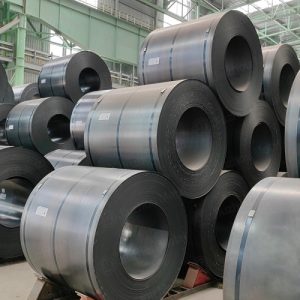
Carbon steel coils are versatile, durable materials used in manufacturing, construction, and automotive industries for various applications.
View details
Discover how steel exporters can deal with global policies for sustainable steel export. Learn about green steel, EAF steel production andEU CBAM regulations.
View details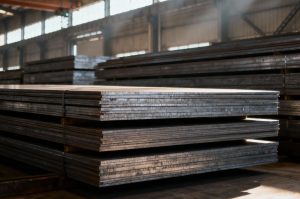
A practical carbon steel material guide covering global standard, grades, properties, sizes and weight calculation tools for structural and industrial projects.
View details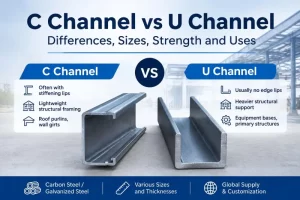
Compare C channel vs U channel steel in differences, sizes, strength, and applications. Learn the key differences and how to choose wisely for your project.
View details
HelloPlease log in