ASTM A36 and JIS SS400 are two widely used mild structural steels in global construction and fabrication.
ASTM A36 is commonly specified in North America and in international projects that follow ASTM-based structural design rules, where its mechanical properties, dimensions, and weight characteristics are clearly defined, while SS400 is widely used in Asia-based engineering, fabrication, and local construction under JIS standards.
In many export-oriented projects, buyers comparing materials often start from a general understanding of ASTM A36 material characteristics and usage scope before evaluating whether SS400 can meet similar engineering requirements.
In practice, contractors and steel buyers frequently ask whether SS400 can be used as an alternative to A36, particularly when sourcing materials locally in Asia, the Middle East, or Africa.
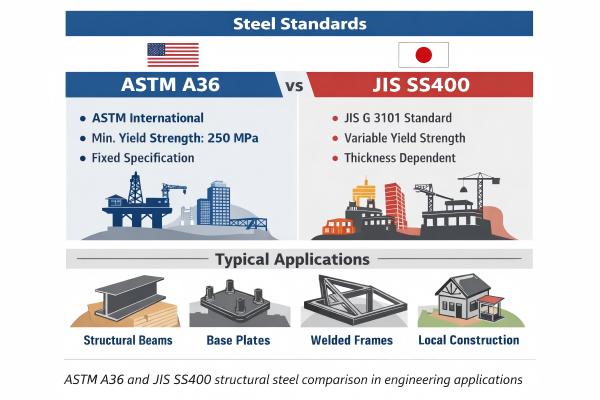
ASTM A36 and JIS SS400 structural steel comparison in engineering applications
ASTM and JIS Steel Standards Explained
Comprender la standard logic behind ASTM and JIS systems is essential when comparing A36 vs SS400.
ASTM A36 is governed by ASTM International, where the standard clearly defines minimum mechanical properties, especially yield strength, regardless of thickness range. This makes ASTM A36 easier to verify in engineering calculations and third-party inspections.
SS400, specified under JIS G 3101, is intended for general structural use. The standard does not explicitly define a minimum yield strength; instead, performance expectations are largely based on common manufacturing practice and thickness-based experience.
This difference in standard philosophy explains why SS400 is often discussed as a potential substitute rather than a formally recognized equivalent when compared with ASTM A36 structural steel, a situation also seen when ASTM-based materials are compared with EN structural grades such as A36 vs S235JR.
Yield Strength and Mechanical Property Differences
From an engineering perspective, yield strength is the most critical parameter when evaluating ASTM A36 vs SS400.
Typical mechanical reference values:
ASTM A36
Minimum yield strength: 250 MPa (36 ksi) for thickness up to 200 mm
Tensile strength: 400–550 MPa
SS400
Yield strength: not specified in JIS G 3101
Common mill practice:
≤ 16 mm: approximately 245 MPa
16–40 mm: approximately 235 MPa
40 mm: may be lower depending on rolling practice
Tensile strength: 400–510 MPa
Because ASTM A36 defines a clear minimum yield requirement while SS400 does not, the a36 ss400 difference is less about nominal strength and more about mechanical consistency and verification.
Thickness Effect and Manufacturing Practice
Thickness has a direct impact on SS400 performance in real engineering projects.
In Asian fabrication markets, SS400 is commonly used for base plates, light structural frames, and non-critical load-bearing components. Within thinner ranges, its performance often aligns closely with expectations for mild structural steel.
As thickness increases, however:
Yield strength may decrease
Property variation between mills becomes more noticeable
Reliance on actual mill test certificates becomes essential
By contrast, ASTM A36 maintains a clearly defined minimum yield strength across thickness ranges, which is one reason it is more readily accepted in international EPC projects and export-oriented fabrication. This thickness-related difference is also a key factor discussed in many engineering-oriented A36 comparison analyses.
Common Applications in Construction and Fabrication
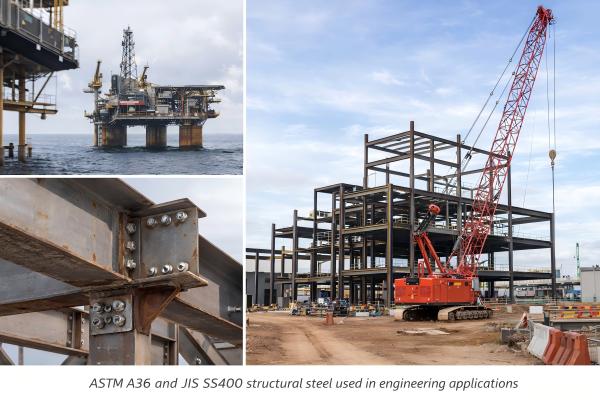
ASTM A36 and JIS SS400 structural steel used in construction and industrial fabrication projects
Both ASTM A36 and SS400 are widely used in:
Structural beams and columns
Placas base y soportes
Welded frames and supports
General fabrication and machining
In practice, usage patterns differ.
SS400 is more commonly applied in local Asian construction projects and cost-sensitive fabrication where JIS standards are accepted. ASTM A36 is more frequently specified in export projects, multinational construction, and engineering designs that explicitly reference ASTM standards.
From a fabrication and welding standpoint, both materials offer good weldability due to their low carbon content, provided appropriate welding procedures are followed.
Can SS400 Replace ASTM A36 in Projects?
This is the central concern behind most searches related to astm a36 vs ss400.
In some projects, SS400 is accepted as a substitute when the structure is non-critical, thickness is controlled, and actual mill test data confirms that mechanical properties meet design assumptions, a decision process that is similar to how engineers evaluate substitution risks in ASTM A36 vs Q235B comparisons. Engineering approval is typically required before substitution is allowed.
However, risks remain:
Lower or inconsistent yield strength in thicker SS400 plates
Potential rejection during third-party inspection
Non-compliance with contracts that explicitly specify ASTM A36
Limited acceptance in international or export-oriented projects
In engineering practice, SS400 should be treated as conditionally comparable rather than a direct one-to-one replacement for ASTM A36. Similar considerations also apply when evaluating other ASTM A36 alternative materials used in different regional markets.
Conclusión
Al comparar A36 vs SS400, the most important differences lie in:
Yield strength definition
Thickness sensitivity
Standard enforcement philosophy
ASTM A36 provides clearer mechanical guarantees and broader international acceptance. SS400 is widely used in Asian engineering but requires careful verification when considered as a substitute.
For construction and fabrication projects involving multiple standards, material selection should always be based on certified mechanical data and engineering approval, not on grade naming similarity alone.
Preguntas frecuentes
Q1: Is SS400 equivalent to ASTM A36? A: SS400 is not officially equivalent to ASTM A36. While their tensile strength ranges are similar, SS400 does not guarantee a minimum yield strength in the standard.
Q2: Can SS400 be used instead of A36 in construction projects? A: It may be accepted in non-critical or locally approved projects, provided actual mill test data meets design requirements and substitution is approved by the engineer.
Q3: Why is SS400 yield strength different by thickness? A: SS400 relies on mill practice rather than fixed standard limits. As thickness increases, achievable yield strength typically decreases.
Q4: Which steel is safer for export or EPC projects, A36 or SS400? A: ASTM A36 is generally safer due to clearly defined mechanical requirements and broader international acceptance.
Standard checkered steel plate sizes, thickness charts, pattern types, weight and typical applications. Practical guide for flooring, stairs and platforms.
Explore las opciones de peldaños, cantoneras y suelos de chapa de diamante y de damero. Soluciones de acero antideslizante con grosor, peso y guía de aplicación precisos.
Descubra las mejores placas de acero NM400, NM450 y NM500 resistentes al desgaste para equipos de minería y canteras. Mejore la durabilidad y reduzca el tiempo de inactividad con CJM Steel.
Explore las principales calidades de acero para recipientes a presión, como ASTM A516, A387, EN P265GH, P355GH y GB Q345R. Compare propiedades y aplicaciones en calderas y depósitos.
HolaConéctese