 CJM Steel Group Ltd.

Corrugated Steel Sheet Sizes, Dimensions & Thickness Guide
956Find common corrugated steel sheet sizes and dimensions, with ft-to-mm conversions, gauge-to-thickness references, and standard size options.
Ver detallesBuscar en toda la estación
C channel vs U channel steel is a common comparison when selecting steel sections for construction, fabrication, framing, and industrial projects. Although both are open channel sections, their section shape, flange configuration, manufacturing method, and structural behavior can differ significantly.
The key difference is that C channels are often cold-formed sections with inward-bent lips, while U channels such as UPN and UPE are commonly hot-rolled structural sections with open flanges. These differences affect how each section performs under load and where it is typically used.
Comprender la difference between C channel and U channel helps engineers, contractors, fabricators, and buyers evaluate section design, structural requirements, dimensions, and application conditions before selecting a channel.
Esta guía compara C channel and U channel steel by profile design, size considerations, strength characteristics, applications, and selection factors.
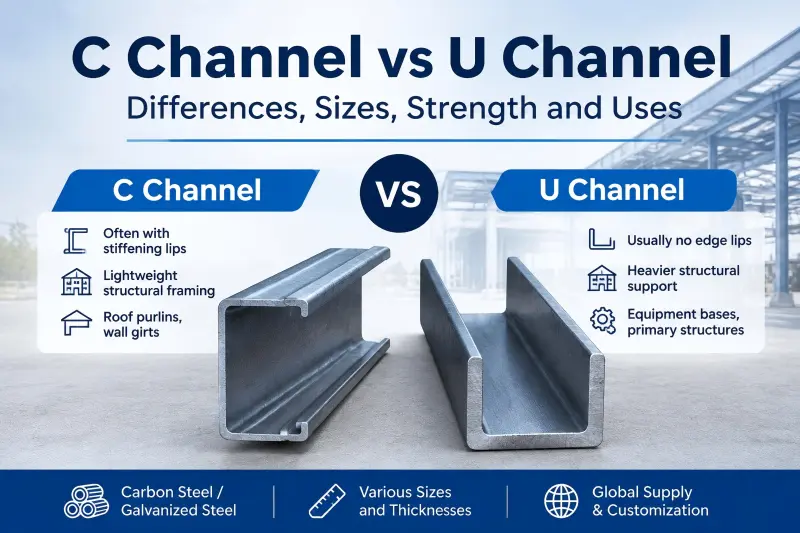
The main difference between C channel and U channel is their cross-sectional geometry, flange configuration, and the types of sections commonly used for structural applications.
| Comparison | Canal C | Canal U |
|---|---|---|
| Cross-section | C-shaped open section | U-shaped open section |
| Flange design | May include stiffening lips | Usually open flanges |
| Typical production | Often cold formed for C purlins and light structural sections | Commonly hot rolled for structural U sections |
| Section weight | Often lighter in cold-formed configurations | Often heavier in hot-rolled structural configurations |
| Local buckling | Stiffening lips may improve local stability | Depends on flange/web geometry and thickness |
| Typical structural role | Purlins, girts, light framing | Structural frames, supports, heavier applications |
| Size selection | Depth, flange width, thickness, and lip dimensions | Depth, flange width, web thickness, and flange thickness |
| Common standards | Depends on the C-section type | UPN, UPE, and other applicable standards |
These are general characteristics rather than universal rules. The actual performance of a C or U channel depends on the specific section, material, dimensions, and loading conditions.
Al comparar C channel vs U channel sizes, nominal depth alone is not enough to determine whether two sections are equivalent.
Important dimensions include:
C channels and U channels use different section configurations and standards, so two sections with similar nominal depths can have different cross-sectional areas, weights, moments of inertia, and section moduli.
For detailed size information, C channel dimensions and standard size ranges can be reviewed in our guide to steel C channel sizes chart, while U channel specifications and common dimensions are covered in our U channel steel sizes guide.
Different projects may require different combinations of size and thickness. Heavy structural applications usually require larger sections with greater thickness, while lightweight fabrication projects may use smaller channel sections.
C channel vs U channel strength is not determined simply by whether one profile is C-shaped or U-shaped.
Actual structural performance depends on the complete cross-section and loading conditions, including:
A C channel with stiffening lips may provide efficient strength-to-weight performance, while a heavier hot-rolled U channel may provide greater sectional mass and rigidity. However, these characteristics do not mean that one channel type is universally stronger.
A heavier U channel is not automatically stronger for every loading condition, and a lighter C channel is not automatically weaker. The appropriate section should be selected based on calculated structural requirements and the applicable design standard.
Therefore, when comparing c channel vs u channel strength, the better choice depends on the project design and required structural performance rather than the channel shape alone.
The applications of C channel and U channel steel overlap in some areas, but each profile has advantages in specific situations.
| Aplicación | More Commonly Used Section | Razón |
|---|---|---|
| Roof purlins | C channel | Efficient for secondary framing |
| Wall girts | C channel | Commonly used for secondary wall framing |
| Light steel framing | C channel | Efficient section-to-weight characteristics |
| Heavy structural frames | Canal U | Available in heavier hot-rolled structural sections |
| Equipment supports | Canal U | Sectional mass and rigidity can be advantageous |
| Industrial support structures | C or U | Depends on load, span, and section properties |
| Machinery and fabrication frames | C or U | Depends on the required section and design |
The final choice should be based on the specific structural requirements rather than application category alone.
La elección entre C channel or U channel should be based on the actual structural and fabrication requirements rather than on the channel shape alone.
For construction and industrial projects, buyers should consider not only the channel shape but also steel grade, thickness, dimensions, manufacturing standard, and supplier capability.
Neither is universally stronger. Strength depends on the section dimensions, thickness, steel grade, section properties, loading conditions, and buckling requirements.
C channels are commonly associated with cold-formed sections and may include stiffening lips, while structural U channels such as UPN and UPE are commonly hot-rolled sections with open flanges.
C and U channels use different section configurations and standards. Compare depth, flange width, thickness, weight, and section properties rather than nominal depth alone.
C channels are commonly used for roof purlins because they are widely available in efficient cold-formed configurations. The final section should still be selected according to the project loads, span, and design requirements.
C channel and U channel steel are both widely used structural steel sections, but their different designs make them suitable for different applications.
C channels are commonly used for purlins, girts, light framing, and other secondary structural applications, while U channels such as UPN and UPE are commonly used for structural frames, supports, equipment bases, and heavier structural applications.
By comparing channel design, flange structure, size requirements, strength characteristics, and applications, buyers can select the right steel channel solution for their projects.
Suministros de acero CJM C channel steel y U channel steel in different sizes, thicknesses, and specifications for construction, manufacturing, and industrial applications. Our steel channels support customized requirements and export projects worldwide.
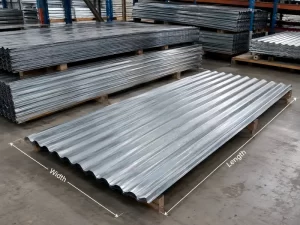
Find common corrugated steel sheet sizes and dimensions, with ft-to-mm conversions, gauge-to-thickness references, and standard size options.
Ver detalles
Utilice nuestra calculadora de peso de chapa de acero para estimar rápidamente el peso del acero para chapas al carbono, inoxidables o galvanizadas.
Ver detalles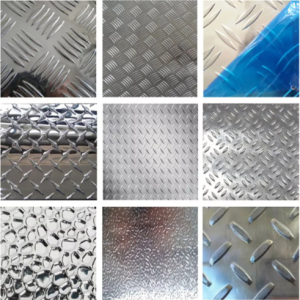
Checkered plate thickness 2.5–12mm, weight 19.6–94.2 kg/m². Diamond, five-bar & lentil patterns. Grades A36, Q235, S235JR & galvanized. Size guide included.
Ver detalles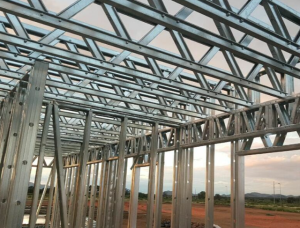
Explore U Channel Steel sizes in mm and grades. Check prices, stock availability, and order for construction or distribution projects worldwide.
Ver detalles
HolaConéctese