 CJM Steel Group Ltd.

S235 vs S275 vs S355 Steel: Strength, Price & How to Choose
16093Compare S235 vs S275 vs S355 steel in strength, price and applications. Learn the key differences and choose the right steel grade for your project.
Ver detallesBuscar en toda la estación
S235, S275 and S355 are the most widely used structural steel grades defined under EN 10025. They are commonly applied in buildings, bridges, machinery, and general structural fabrication.
This guide provides a clear overview of S235 S275 S355 steel properties, including yield strength, tensile strength, chemical composition, and equivalent grades (ASTM, JIS, GB). The focus is on technical data and standardized performance values.
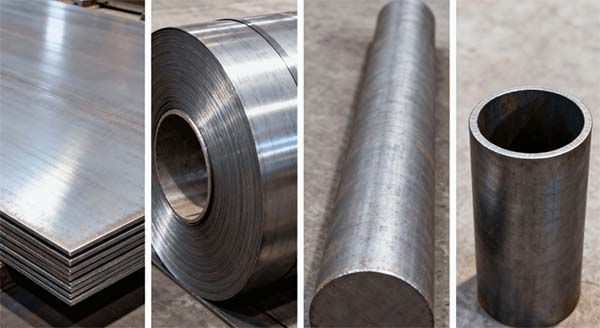
The table below summarizes the most searched mechanical properties of S235, S275 and S355 steel, including yield strength, and tensile strength.
| Grado | Límite elástico (MPa) | Resistencia a la tracción (MPa) | Alargamiento (%) |
| S235 | 235 | 360-510 | ≥26 |
| S275 | 275 | 370-530 | ≥23 |
| S355 | 355 | 470-630 | ≥22 |
These values represent standard minimum requirements according to EN 10025-2 for thickness up to 16 mm.
Comprender S235 S275 S355 steel equivalent is essential for international procurement and cross-standard material selection.
| Norma EN | Equivalente ASTM | Equivalente JIS | Equivalente GB |
| S235JR | ASTM A36 | SS400 | Q235B |
| S275JR | ASTM A36 / ASTM A529 | SM400A / B | Q275 |
| S355JR | ASTM A572 | SM490A / B | Q345B |
These equivalents are approximate and should be verified against specific project requirements and standards.
En yield strength of S235, S275 and S355 steel is the primary classification basis under EN 10025:
For thicker plates, the minimum yield strength decreases according to standard thickness ranges.
Typical tensile strength of structural steel grades:
Higher tensile strength indicates better resistance to deformation under load.
All three grades are considered weldable under standard fabrication conditions.
The difference in strength between these grades is mainly influenced by carbon and manganese content.
| Grado | Carbono (C %) | Manganeso (Mn %) | Explicación |
| S235 | ≤0.17 | ≤1.40 | Bajo contenido en carbono, excelente soldabilidad, menor resistencia |
| S275 | ≤0.21 | ≤1.50 | Carbono y manganeso ligeramente superiores, propiedades equilibradas |
| S355 | ≤0.24 | ≤1.60 | Mayores niveles de C y Mn, lo que se traduce en un mayor límite elástico |
Engineers should note that while increasing C and Mn enhances límite elástico, it can slightly reduce weldability.
1.Strength: S355 > S275 > S235 in both yield and tensile strength
2.Structural Load Capacity:
3.Weldability: All grades offer good weldability
4.Toughness / Sub-Grades: JR → J0 → J2, increasing energy absorption (Charpy impact)
For a practical understanding of how these grades differ in real projects, including strength comparison, price differences and selection considerations, see our S235 vs S275 vs S355 steel comparison and selection guide.
For a deeper understanding of impact test requirements and the differences between JR, J2 and NL grades, see our S355JR vs S355J2 vs S355NL differences guide.

Compare S235 vs S275 vs S355 steel in strength, price and applications. Learn the key differences and choose the right steel grade for your project.
Ver detalles
Compare ASTM A514 grades B, E, H, and Q. Learn key differences in strength, thickness, and applications to select the right A514 steel grade for your project.
Ver detalles
Learn impact resistant steel grades, properties, and applications, and why A709, NM500, AR400, and S7 steels are suitable for structures and heavy equipment.
Ver detalles
Compare AR500 vs AR550 vs AR600 steel in hardness, wear resistance, price, and use. Learn how to choose the right abrasion resistant steel for your project.
Ver detalles
Excellent article comparing S235, S275, and S355 structural steel grades! The breakdown of mechanical properties and applications is very helpful for engineers and procurement specialists.
2025-11-1601:05