In international structural projects, ASTM A36 vs EN S235JR is a common comparison when U.S. and European standards intersect. Although both are widely used carbon structural steels with similar strength levels, they are defined under different standard systems and design philosophies, which directly affects substitution decisions.
Understanding these differences is essential when selecting materials for global engineering and export projects.
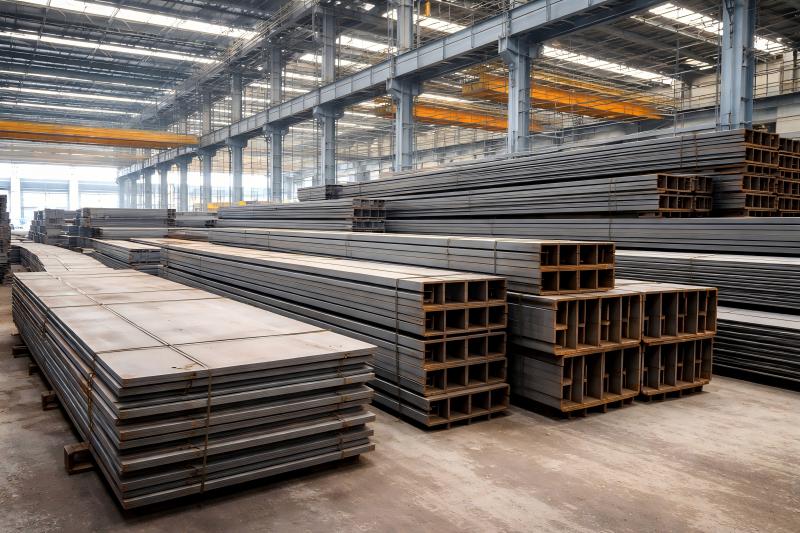
Structural steel materials used in international construction projects
Overview of ASTM A36 and EN S235JR
ASTM A36 is a carbon structural steel grade specified under the ASTM standard system, primarily used in projects following American codes and international contracts referencing ASTM materials. For a detailed technical overview—including chemical composition, mechanical performance, available dimensions and common equivalents—see ASTM A36 steel properties and equivalent grades.
EN S235JR is a European structural steel grade defined in EN 10025, commonly applied in EU-based construction, steel structures, and international projects adopting European standards.
Because both grades offer comparable yield strength levels and are widely available, ASTM A36 vs S235JR is frequently discussed as a potential cross-standard substitution.
ASTM A36 vs EN S235JR: ASTM and EN Standard System Differences
Al comparar ASTM A36 vs EN S235JR, the most important distinction lies in how the two standard systems define structural steel.
The ASTM system focuses on:
Minimum guaranteed mechanical properties
General-purpose applicability
Simplified grade definitions suitable for a wide range of projects
The EN system, by contrast, classifies structural steel based on:
Yield strength levels
Impact test requirements
Application environments and service temperatures
This structural difference means EN standards embed more service-condition assumptions directly into the grade designation.
ASTM A36 vs S235JR: Mechanical Properties Comparison
From a mechanical standpoint, ASTM A36 vs S235JR shows similar yield strength ranges, which is why they are often considered together.
ASTM A36 specifies a minimum yield strength of 250 MPa
EN S235JR specifies a minimum yield strength of 235 MPa
Tensile strength ranges also overlap significantly.
However, this comparison should not be interpreted as “better or worse.” Instead, it reflects different approaches to defining structural performance, rather than a direct one-to-one equivalence.
Impact Test and Toughness Requirements: A Key Difference
One of the most critical differences in ASTM A36 vs EN S235JR lies in impact toughness requirements.
EN S235JR includes a mandatory Charpy V-notch impact test:
“JR” indicates impact energy ≥ 27 J at +20°C
ASTM A36, in its standard specification, does not require mandatory impact testing unless explicitly requested by the project specification.
A36 toughness requirements depend on project-specific agreements
For structures exposed to dynamic loads, temperature variation, or impact-sensitive conditions, this difference becomes particularly relevant.
Typical Applications and Use Scenarios
In international structural projects, material selection often depends on the governing standard rather than strength alone.
ASTM A36 is commonly used in:
U.S.-code-based structures
Export projects referencing ASTM materials
General fabrication without defined impact requirements
EN S235JR is typically selected for:
European-standard structures
Projects requiring defined impact performance
Multi-grade EN structural steel frameworks
Within the EN structural steel system, S235JR is often selected alongside higher-strength grades depending on load requirements and design margins. To better understand how S235JR compares with other EN grades in terms of strength level and typical applications, refer to thisS235, S275 and S355 structural steel comparison.
Is S235JR Equivalent to ASTM A36?
Is S235JR equivalent to ASTM A36? From a strict standards perspective, they are not officially equivalent, as they belong to different standard systems.
From a functional standpoint:
S235JR may serve as an alternative to A36 in projects where EN standards are accepted
A36 may be used in place of S235JR only if impact toughness requirements are clearly addressed
Therefore, S235JR and ASTM A36 should be considered conditionally interchangeable, depending on project specifications, inspection requirements, and governing codes.
Summary and Selection Guide
In summary, ASTM A36 vs EN S235JR is not a question of superiority, but of standard compatibility and application context.
Choose ASTM A36 for ASTM-governed or U.S.-oriented projects
Choose EN S235JR when European standards and impact requirements apply
Avoid direct substitution without reviewing toughness and compliance expectations
Clear understanding of these differences helps reduce technical risk and ensures smoother material approval in international structural projects.
ASTM A36 vs S235JR: Frequently Asked Questions
Q1: Is S235JR equivalent to ASTM A36? S235JR is not officially equivalent to ASTM A36, as they follow different standard systems and classification methods.
Q2: What is the main difference between A36 and S235JR? The main difference is that S235JR includes mandatory impact test requirements, while ASTM A36 does not unless specified.
Q3: Can S235JR replace A36 in international projects? S235JR can replace A36 only when EN standards are accepted and project specifications allow EN materials.
Q4: Which steel is better for low-temperature applications? S235JR is generally preferred due to its defined impact toughness requirement.
Q5: Why are A36 and S235JR often compared? They are compared because of their similar yield strength levels and widespread use in international structural projects.
Las barras de acero al carbono son materiales resistentes y duraderos que se utilizan en la construcción, la industria manufacturera y la maquinaria para soportes estructurales y componentes.
A36 vs A572 vs A516: which steel is better? Compare strength, price and applications, plus A283 equivalents. A practical guide for buyers and engineers.
Standard steel plate thickness chart from 1/4” to 12”, including inch-to-mm conversion and weight reference. Quick lookup table for engineering and fabrication projects.
 CJM Steel Group Ltd.


HolaConéctese