 CJM Steel Group Ltd.

How to Import Carbon Steel Plates from China: Supplier Selection, Costs & Process
2300Source carbon steel plates from China with this guide covering suppliers, prices, grades, shipping, import costs, and key factors for global buyers.
Ver detallesBuscar en toda la estación
When sourcing carbon steel plates for export projects, understanding the differences between ASTM A36 vs Q235B is critical for procurement decisions. While both are widely used structural steels, differences in standards, certification, and inspection requirements directly affect substitution feasibility and project compliance.
| Chinese Standard | Equivalente ASTM |
|---|---|
| Q235B | ASTM A36 (commonly used equivalent) |
Conclusion:
Q235B is widely considered equivalent to ASTM A36 in general structural applications, but it is not officially interchangeable due to differences in standards, certification, and compliance requirements.
| Propiedad | ASTM A36 | Q235B |
|---|---|---|
| Standard System | ASTM | GB/T 700 |
| País / Región | United States / International | China |
| Tipo de acero | Carbon Structural Steel | Carbon Structural Steel |
| Minimum Yield Strength | 250 MPa (36 ksi) | 235 MPa |
| Resistencia a la tracción | 400-550 MPa | 370–500 MPa |
| Contenido de carbono | ≤ 0.26% | ≤ 0.22% |
| Alargamiento | ~20% | ~20–26% |
| Certification / MTC | ASTM | GB MTC |
| Traceability Requirement | Strict | Varies by mill |
| Practical Equivalent | - | ASTM A36 (commonly compared) |
| Official Equivalent | No | No |
| Main Application | Export structural projects | Domestic fabrication & non-critical export projects |
Nota: For a detailed equivalency reference, check the ASTM A36 equivalent steel grades table.
From a practical perspective, Q235B and ASTM A36 are functionally similar low-carbon structural steels, which is why they are often compared.
However, key differences remain:
Conclusion: Q235B can be considered a practical equivalent to ASTM A36, but it is not a direct substitute in regulated or ASTM-specified projects.
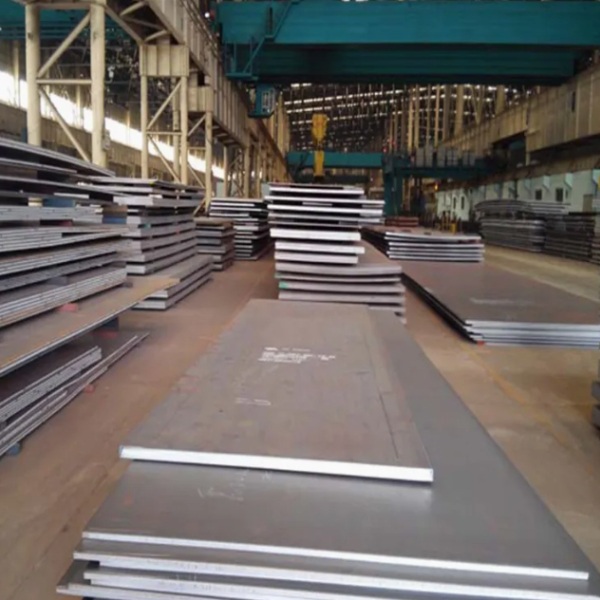
| Elemento | ASTM A36 | Q235B |
|---|---|---|
| Carbono (C) | ≤ 0.26% | ≤ 0.22% |
| Manganeso (Mn) | 0.80–1.20% | ≤ 1.40% |
| Silicio (Si) | ≤ 0.40% | ≤ 0,35% |
| Fósforo (P) | ≤ 0.04% | ≤ 0,045% |
| Azufre (S) | ≤ 0.05% | ≤ 0,045% |
While the chemical ranges are similar, ASTM A36 applies tighter control for export-grade certification.
| Propiedad | ASTM A36 | Q235B |
|---|---|---|
| Límite elástico | ≥ 250 MPa | ≥ 235 MPa |
| Resistencia a la tracción | 400-550 MPa | 370–500 MPa |
| Alargamiento | ~20% | ~20–26% |
Although mechanical properties are close, similar performance does not guarantee equivalence in compliance or approval.
| Característica | ASTM (A36) | GB (Q235B) |
|---|---|---|
| Primary Focus | International compliance & traceability | Domestic manufacturing flexibility |
| Inspection & Documentation | Required | Varies by mill |
| Production Tolerance | Strict | Broader |
| Substitution Risk in Export | Bajo | High if ASTM compliance required |
These differences directly impact substitution feasibility and project approval.
Q235B should not replace ASTM A36 when:
In these scenarios, substitution may lead to rejection, rework, or legal disputes, even if the material performs adequately in service.
Best Practice:
For broader comparisons across structural steel grades, you may also find this guide useful: common ASTM steel plate grades comparison

Source carbon steel plates from China with this guide covering suppliers, prices, grades, shipping, import costs, and key factors for global buyers.
Ver detalles
Looking for ASTM A572 equivalent material? Check Grade 50 equivalents (EN/GB), yield strength chart, and verified properties to avoid wrong material selection.
Ver detalles
Learn what abrasion resistant steel is, how it works, key properties, grade systems, and how it compares with other abrasion resistant metals in industrial use.
Ver detalles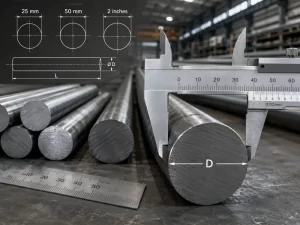
Explore steel round bar sizes, dimensions, and weight charts in metric and inch sizes. Learn round bar weight per foot, kg/m, and calculation formulas.
Ver detalles
HolaConéctese