→ Standard bridge, cost-sensitive project → Grado 50 → Exposed structure, unpainted finish → Grade 50W (weathering steel) → Long-span bridge or cold climate project → HPS 70W → Need rounds or angles for exposed members → Grade 50W rounds / corten angles
All grades available export-ready from China with Mill Test Report (MTR) and SGS inspection.
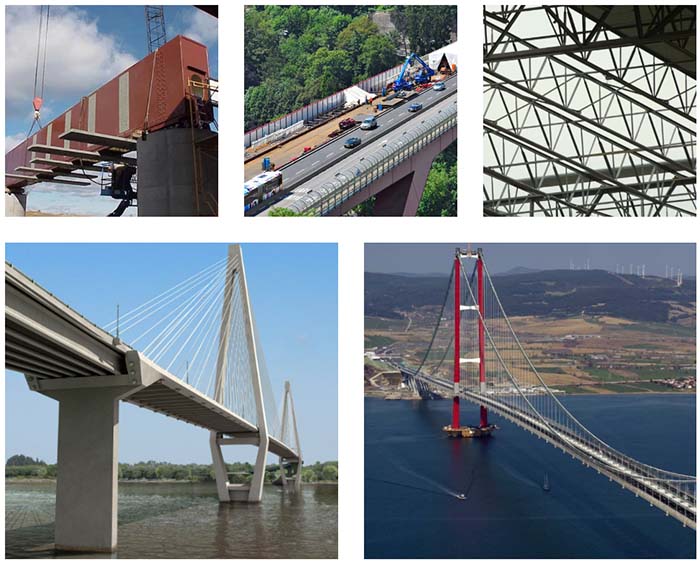
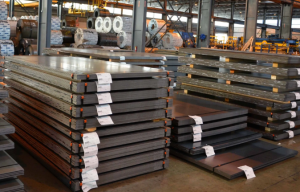
<br>Placa de acero ASTM A709 utilizada en la construcción moderna de puentes de carretera
What Is ASTM A709 and Who Needs It
ASTM A709 is the structural steel specification for bridge construction in the United States, covering a range of carbon and high-strength low-alloy (HSLA) steels for critical load-bearing members.
If your project involves highway bridges, pedestrian crossings, railway overpasses, or similar infrastructure, your engineer or client specification is likely referencing one of three grades: Grade 50, Grade 50W, or HPS 70W.
Each grade serves a different structural and environmental purpose. This guide helps procurement managers and project teams understand the differences and make the right material decision before sourcing.
Key performance requirements addressed by ASTM A709 include:
Structural strength for bridge loading conditions
Notch toughness for fracture-critical members
Atmospheric corrosion resistance for exposed structures
Weldability and fabrication performance
Grade overview:
ASTM A709 Grado 50 — Balanced strength and cost, commonly used in general bridge structures
ASTM A709 Grado 50W — Enhanced atmospheric corrosion resistance for exposed bridge components
ASTM A709 HPS 70W — Higher strength and improved toughness for long-span and high-performance bridges
ASTM A709 Grade Comparison: Which One Fits Your Project?
Before reviewing each grade in detail, the table below provides a side-by-side comparison to help narrow down your selection based on project requirements.
Factor
Grado 50
Grado 50W
HPS 70W
Límite elástico
345 MPa (50 ksi)
345 MPa (50 ksi)
485 MPa (70 ksi)
Resistencia a la tracción
450-620 MPa
485-620 MPa
585–760 MPa
Resistencia a la corrosión
Estándar
Self-patina (no paint)
Self-patina (no paint)
CVN Toughness
Required
Required
Required
Paint Required
Sí
No (if exposed)
No (if exposed)
Coste relativo
$
$$
$$$
Available Forms
Plate, heavy plate
Plate, rounds, angles
Plate, heavy plate
Lo mejor para
General bridges
Exposed structures
Long spans, cold climates
ASTM A709 Grado 50
Minimum yield strength: 345 MPa (50 ksi)
Tensile strength: 450–620 MPa (65–90 ksi)
Aplicaciones: General bridge components, including girders and supports
Key advantage: Cost-effective balance of strength and weldability
Grade 50 is the standard choice for conventional bridge construction where atmospheric corrosion resistance is not a primary requirement and protective coating systems will be applied.
ASTM A709 Grade 50W — Weathering Steel
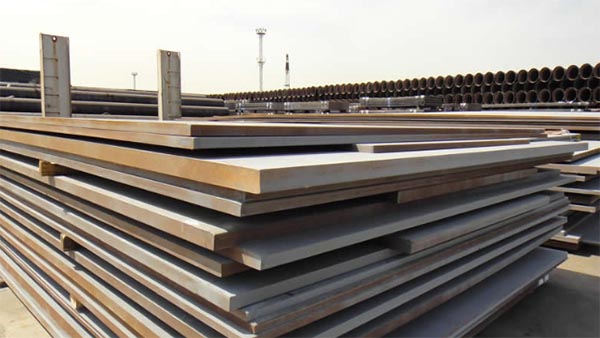
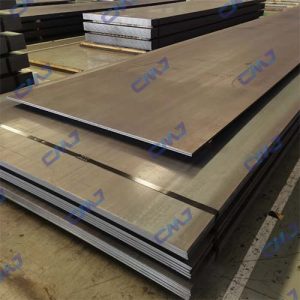
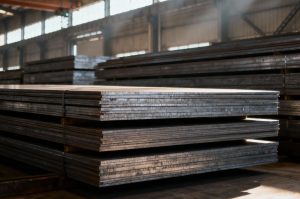
Stacked astm a709 50w corten weathering steel
Minimum yield strength: 345 MPa (50 ksi)
Key feature: Resistencia a la corrosión atmosférica
Alloying elements: Copper, chromium, and nickel
Common uses: Exposed bridge structures where paint systems are not desirable
Grade 50W forms a stable protective oxide layer (patina) when exposed to suitable environments, reducing the need for painting and long-term maintenance. It is commonly specified for exposed bridge structures where lifecycle cost control is a priority.
ASTM A709 HPS 70W — High Performance Steel
Minimum yield strength: 485 MPa (70 ksi)
Tensile strength: 585–760 MPa
Designed for: Enhanced toughness and improved weldability
Typical applications: Long-span bridges and fracture-critical members
HPS 70W enables lighter structural designs while maintaining excellent fracture resistance, even in colder climates. It is typically specified when Grade 50W does not provide sufficient strength for the structural demand.
Product Forms: As-Rolled Plate, Heavy Plate, Rounds & Angles
ASTM A709 steel is available in several product forms depending on structural function and fabrication method:
As-rolled ASTM A709 plates are often specified where post-heat treatment is not required and where cost efficiency is important. Typical applications include bridge girder webs and flange plates.
Heavy plate sections are used for primary load-bearing members such as girders and stiffeners, where thickness and through-thickness properties are critical.
Grade 50W weathering steel is also available in rondas and corten ángulos for exposed structural components, where both corrosion resistance and structural performance are required. These forms are commonly used in pedestrian bridge railings, exposed cross-frames, and decorative structural elements.
These forms reflect design and fabrication choices, not performance differences within the ASTM A709 specification itself. The grade selected determines corrosion resistance and strength; the product form is determined by the structural detail and fabrication requirement.
For detailed dimensions, thickness ranges, and available grades used in bridge fabrication, you can refer to our Placa de acero ASTM A709 product page.
When to Specify Grade 50W: Weathering Steel for Exposed Structures
ASTM A709 Grade 50W weathering steel is particularly suitable for unpainted, exposed bridge structures. Its protective patina develops naturally over time, minimizing further corrosion under appropriate environmental conditions.
Grade 50W is often specified for:
Pedestrian and vehicular bridges in rural or low-pollution environments
Mountainous or inland crossings with limited maintenance access
Bridge components where paint application and recoating are not practical
Architectural bridge designs where a natural weathered appearance is preferred
Important: Grade 50W performs best in environments with alternating wet and dry cycles. It is not recommended for constant water contact, buried conditions, or highly industrial or marine environments.
Grade 50W vs HPS 70W: Mechanical Performance Compared
Grado
Límite elástico (MPa)
Resistencia a la tracción (MPa)
Alargamiento (%)
Resistencia Charpy V-Notch
50W
345
485-620
≥ 18
Bueno a temperatura ambiente
HPS 70W
485
585-760
≥ 19
Excelente a bajas temperaturas
From a selection perspective:
HPS 70W prioritizes strength and toughness for long-span applications
Grade 50W emphasizes corrosion resistance and reduced maintenance cost
Environmental Considerations by Region
Middle East / Hot-dry climate: Grade 50W performs well inland. Coastal projects should use coated Grade 50.
Southeast Asia / Coastal-humid: High humidity may prevent stable patina. Prefer coated Grade 50 near marine areas.
Russia / Extreme cold: HPS 70W preferred for low-temperature toughness.
Europe / Temperate: Both 50W and HPS 70W are commonly used depending on structure.
ASTM A709 vs ASTM A588: Choosing the Right Weathering Steel Standard
Característica
A709 Grado 50W
ASTM A588
Diseñado para
Construcción de puentes
General structures
CVN toughness
Mandatory
Not required
Fracture-critical use
Covered
Not specified
Límite elástico
345 MPa
345 MPa
Resistencia a la corrosión
Similar
Similar
Bridge use
Correct spec
Not recommended
For any fracture-critical bridge member, always specify ASTM A709 — not A588.
Practical Grade Selection: A Decision Framework for Procurement Teams
Use Grade 50 when:
Steel will be painted
Cost-sensitive projects
Standard bridge components
Use Grade 50W when:
Exposed, unpainted structures
Inland / temperate environments
Lifecycle cost reduction is needed
Use HPS 70W when:
Long-span bridges
Cold climates
High strength and toughness required
Sourcing ASTM A709 Steel Plate from China: What to Expect
Learn what Q195 steel is, its equivalent grades (ASTM A1008, SPCC, DC01), and how it compares with Q235 steel in strength, composition, and applications.
Guía completa sobre la chapa de acero ASTM A514: resistencia, dureza, soldadura, maquinabilidad, composición química y grados equivalentes para sus proyectos.
A practical carbon steel material guide covering global standard, grades, properties, sizes and weight calculation tools for structural and industrial projects.
 CJM Steel Group Ltd.

HolaConéctese