This comprehensive guide is created for international steel buyers, engineers, EPC contractors, and project managers who need reliable, decision-oriented information about carbon steel materials.
Carbon steel is an iron-based alloy in which carbon is the primary alloying element, with limited additions of manganese, silicon, phosphorus, and sulfur. Unlike alloy steels or stainless steels, carbon steel does not rely on large amounts of chromium, nickel, or molybdenum to achieve performance.
Because of this simple composition, carbon steel offers:
Predictable mechanical behavior
Excellent weldability for structural grades
Wide availability across global standards
Cost efficiency for large-scale projects
For these reasons, carbon steel remains one of the most widely used materials in construction, infrastructure, manufacturing, and general fabrication.
Understanding Carbon Steel Standards and Grade Systems
In international procurement, carbon steel grades are designated under different standard systems such as ASTM, EN, GB, and JIS, each with its own naming logic, chemical composition limits, and mechanical property requirements.
Common Carbon Steel Standards and Typical Grades:
ASTM (United States) – application-oriented standards such as A36 (structural steel), A572 (high-strength structural steel), and A516 (pressure vessel quality steel).
ES (Europa) – strength-based grades such as S235, S275, and S355, where the number indicates minimum yield strength in MPa.
GB (China) – grades like Q235 and Q355, closely aligned with EN yield-strength concepts but defined by domestic specifications.
JIS (Japón) – grades such as SS400, commonly used in Asian markets and export fabrication.
Estándar
Typical Grades
Aplicaciones típicas
ASTM
A36, A572, A516
structural steel, bridges, pressure vessels
ES
S235, S275, S355
buildings, steel structures
GB
Q235, Q355
construction and infrastructure
JIS
SS400
fabrication and export structures
In cross-border projects, buyers often need to align carbon steel grades from different standards, as technically comparable grades may follow different designation rules and testing methods.
Understanding these grade systems helps engineers and procurement teams select materials that meet both design requirements and regional compliance standards.
Types of Carbon Steel (Low, Medium, and High Carbon Steel)
Carbon steel is commonly classified based on carbon content. The amount of carbon directly affects the material’s strength, hardness, ductility, and weldability.
Main Types of Carbon Steel
Tipo
Contenido de carbono
Usos típicos
Acero bajo en carbono
< 0.25%
structural steel, plates, fabrication components
Acero al carbono medio
0.25 – 0.60%
shafts, mechanical parts, machinery components
Acero con alto contenido en carbono
> 0.60%
tools, wear-resistant parts, cutting equipment
Low carbon steel accounts for the majority of structural applications because it provides a balanced combination of weldability, formability, and structural strength.
Medium and high carbon steels are generally used for mechanical or specialized applications where higher hardness or wear resistance is required.
Chemical Composition and Mechanical Properties
Carbon steel performance is defined by a combination of chemical composition limits y mechanical property requirements specified in each standard.
Key chemical elements include carbon, manganese, silicon, phosphorus, and sulfur. Proper control of these elements affects weldability, toughness, and consistency.
Typical Chemical Composition Range of Carbon Steel
Elemento
Alcance típico
Carbono (C)
0.05 – 2.0%
Manganeso (Mn)
0.30 – 1.65%
Silicio (Si)
0.10 – 0.60%
Fósforo (P)
≤ 0.04%
Azufre (S)
≤ 0.05%
Mechanical properties typically evaluated include:
Límite elástico
Resistencia a la tracción
Alargamiento
Resistencia al impacto
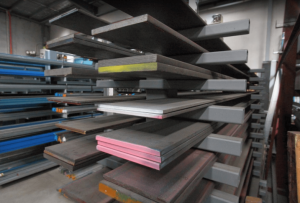
These values form the technical basis for selecting grades suitable for load-bearing, forming, or pressure-related applications. Among low carbon structural steels, Placa de acero ASTM A36 is one of the most widely specified grades for buildings, bridges, general fabrication, and industrial structures. It represents a typical balance of strength, weldability, and availability, making it a common reference point when evaluating carbon steel materials.
Each comparison focuses on strength, corrosion behavior, lifecycle cost, and application suitability.
Carbon Steel Weight and Calculation Tools
Accurate weight estimation is essential for pricing, logistics, and structural planning. Carbon steel plate weight depends on thickness, width, length, and density assumptions. For fast and accurate estimation, you can:
Carbon steel is one of the most recyclable construction materials, with a recycling rate exceeding most alternatives. With proper surface protection and maintenance, its service life in structural applications can be significantly extended.
These characteristics align carbon steel with modern sustainability and lifecycle considerations in infrastructure and industrial projects.
FAQ About Carbon Steel
Q1. What is carbon steel material? Carbon steel material is an iron-based alloy in which carbon is the primary alloying element. It contains limited amounts of manganese, silicon, phosphorus, and sulfur, and does not rely on large additions of chromium or nickel like stainless steel. Because of its simple composition, carbon steel offers predictable mechanical behavior, good weldability for structural grades, and cost efficiency for large-scale projects.
Q2. What are the main types of carbon steel? Carbon steel is commonly classified into low carbon steel, medium carbon steel, and high carbon steel based on carbon content. Low carbon steel is widely used for structural plates and fabrication due to good weldability and balanced strength. Medium carbon steel provides higher strength and hardness for mechanical parts. High carbon steel offers high wear resistance and is mainly used for tools and specialized components.
Q3. What are carbon steel grades? Carbon steel grades are standardized material designations that define chemical composition limits, mechanical property requirements, and applicable delivery conditions. Grades are specified under different standard systems such as ASTM, EN, GB, and JIS, and are typically differentiated by strength level, carbon content range, and intended application.
Q4. What are carbon steel standards? Carbon steel standards are technical specifications that define chemical composition, mechanical properties, testing methods, and delivery conditions. Commonly used standards include ASTM (United States), EN (Europe), GB (China), and JIS (Japan). These standards ensure material consistency and regulatory compliance in international projects.
Q5. What is the chemical composition of carbon steel? The typical chemical composition of carbon steel includes carbon as the primary alloying element, with controlled amounts of manganese, silicon, phosphorus, and sulfur. The exact limits depend on the specific grade and standard. Proper control of these elements affects weldability, strength, toughness, and consistency in structural and industrial applications.
Q6. What are the mechanical properties of carbon steel? Key mechanical properties of carbon steel include yield strength, tensile strength, elongation, and impact toughness. These properties vary by grade, standard, and delivery condition. Structural carbon steel grades are designed to provide a balance of strength, ductility, and weldability for load-bearing applications.
Q7. How much carbon is in carbon steel? Carbon steel typically contains up to about 2.0% carbon by weight. Low carbon structural steels usually contain less than 0.25% carbon, medium carbon steels contain approximately 0.25–0.60%, and high carbon steels contain more than 0.60%. The exact carbon content range is defined by each grade and standard.
Learn the most common automotive steel grades used in car body panels and structural parts, including SPCC, galvanized steel, HSLA and DP600, with their key properties and applications.
Las chapas de acero son un material fundamental en la construcción, la fabricación de equipos pesados, remolques y proyectos de reparación. Elegir el tamaño adecuado de la chapa de acero es esencial para conseguir la resistencia, durabilidad y rentabilidad deseadas. Esta guía...
Explore las bobinas de Incoloy 800, 800H y 800HT en detalle: composición química, propiedades mecánicas y aplicaciones industriales. Le ayudamos a elegir sabiamente.
Learn common structural steel grades, material properties, chemical composition, yield strength, tensile strength, and major ASTM and international standards.
 CJM Steel Group Ltd.



HolaConéctese