Quickly calculate the weight of steel plates by thickness, length, width, density, and quantity. Supports carbon steel, stainless steel, and coated steel plates with instant results.
Knowing the exact steel plate weight is essential for pricing, shipping cost estimation, and structural planning. This calculadora de peso de chapa de acero helps engineers, fabricators calculate plate weight accurately using standard formulas and material densities.
Calculadora de peso de placas de acero
Peso por pieza–
Total weight–
Steel Plate Weight by Thickness
Espesor (mm)
Peso (kg/m²)
5
39.25
6
47.10
8
62.80
10
78.50
12
94.20
16
125.60
20
157.00
* The calculated values are theoretical weights for reference only. Actual steel plate weight may vary due to mill tolerances, thickness deviation, or surface coatings.
How to Calculate Steel Plate Weight
En peso de la chapa de acero is calculated based on length, width, thickness, and material density. Whether you are calculating the weight of a carbon steel plate, stainless steel plate, or galvanized plate, the same basic formula applies.
You can select a material from the calculator to autofill density, or enter a custom value if needed.
Preguntas más frecuentes (FAQ)
Q1. How do you calculate the weight of a steel plate? A: Multiply length × width × thickness × density. For carbon steel, the density is typically 7850 kg/m³.
Q2. What is the weight of a 10mm steel plate? A: A 10mm thick steel plate weighs approximately 78.5 kg per square meter (kg/m²). The total weight depends on the plate’s length and width.
Q3. What is the standard density of steel plates? A: Carbon steel plates are typically 7850 kg/m³, while stainless steel ranges from 7700 to 8000 kg/m³ depending on the grade.
Q4. How do you calculate steel plate weight in kg? A: Use the formula: Weight (kg) = Length (m) × Width (m) × Thickness (m) × 7850
Q5. Can I calculate steel plate weight in kg, lb, or tons? A: Yes. This calculator supports multiple units including kilograms (kg), metric tons (t), and pounds (lb).
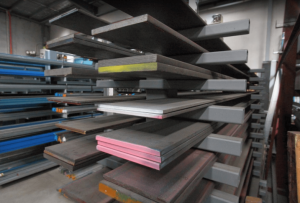
Las chapas de acero son un material fundamental en la construcción, la fabricación de equipos pesados, remolques y proyectos de reparación. Elegir el tamaño adecuado de la chapa de acero es esencial para conseguir la resistencia, durabilidad y rentabilidad deseadas. Esta guía...
Compare pressure vessel steel grades and equivalents across ASTM, EN, and GB standards. Find A516, P265GH, Q345R and other PVQ steel grades in one chart.
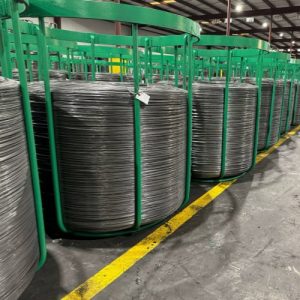
El alambre de acero al carbono es un material muy utilizado en diversas industrias por su resistencia, durabilidad y rentabilidad. Es común encontrarlo en aplicaciones que van desde la automoción a la construcción, ofreciendo un excelente equilibrio de rendimient...
 CJM Steel Group Ltd.


herramienta perfecta
2025-09-1110:44